As the sound of the song “USA” by Dubioza Kolektiv rang through the Zenica stadium at full-time of Bosnia’s dramatic win over Italy to reach the World Cup, the cameras panned to their 40-year old captain, Edin Džeko, who dropped to his knees in relief and exhaustion. He would get his final chance to play in a World Cup after that penalty shootout, and for many, this was the story-line. However, I thought I saw a different kind of relief on Džeko’s face: the relief of knowing that the next generation had just taken the torch and he no longer had to shoulder the weight of an entire nation on his own. It was fitting, that Džeko (presumably Bosnia’s scheduled 5th penalty taker in this match) didn’t even have to take his penalty kick, as Esmir Bajraktarević converted the 4th spot kick to send Bosnia to the World Cup after Kerim Alajbegović scored just prior. Alajbegović, an 18-year old German-born, Bosnian winger, received his first cap for the Bosnian senior team last year, with the match vs. Italy acting as his 8th cap for country, having already become a mainstay. With the score 1-0 to Italy at halftime, Sergej Barbarez subbed off a defender (Sead Kolasinac) for Alajbegović in an attempt to take advantage of the Bastoni red card and get back in the match. The difference was immediately obvious. Bosnia were struggling to create in their 4-4-2 shape, with their strikers being isolated and marked by the Italian defence. Once Alajbegović took up his position on the left wing, the Italians were in for a long 2nd half. Averaging ~ 1 touch per minute on the pitch, the attacking focus for Bosnia shifted to “get this kid the ball”.
Given the moment and stakes of the match, along with the situation he found himself being subbed into, I cannot say enough good things about the mentality and character shown by Kerim Alajbegović in this match. Time and time again he got open to receive the ball, and turned his attention to attacking the box. He was not scared of the moment, but attacked it without hesitation. This is not a winger who wants to hug the touchline and play backwards passes, he wants to create with the ball at his feet, even under the kind of pressure that would make many players lose their nerve. Never dispossessed and having completed 44/46 passes in this match, Alajbegović showed outstanding composure and vision. More than that, he was able to recognize that the Italian defence would eventually wear down under enough pressure, and delivered 15 cross attempts and 7 more corners in limited minutes. While looking at just the stats would tell you that 1/15 crosses were “accurate”, your eyes tell you the impact an “inaccurate” cross can have in the final third. While not reaching a teammate, Alajbegović’s crosses were not simple clearances that didn’t make it past the first defender, they had pace, whip, and really asked a lot of questions of the Italian CB’s, who often “cleared” these crosses right to Bosnian players around the edge of the box. While I will say that Alajbegović does seem to be more of the type of winger to try and carve out shooting opportunities for himself, his vision and creating is no weakness.
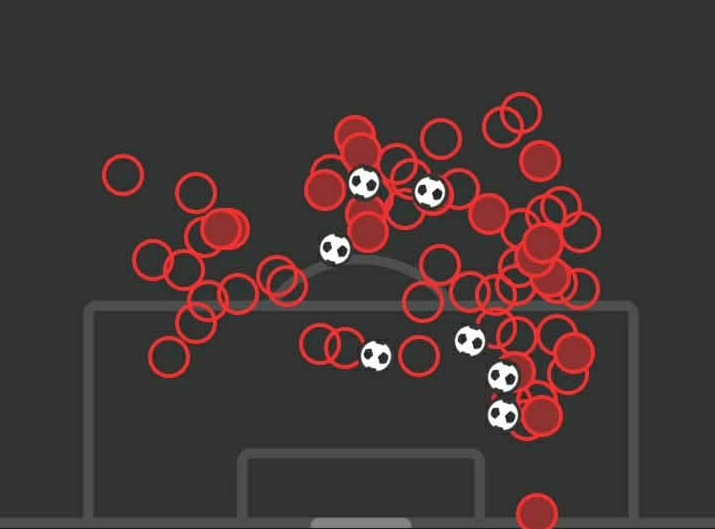
For his player profile, Alajbegović is best operating as an inside forward, from a left-wing position. The closest high-level player comparison I could make based on style is similar to Liverpool’s Cody Gakpo. He identifies central space around the edge of the 18-yard box well and really takes joy out of cutting inside onto his right foot. At times he will keep cutting across the box until you blink and he’s delivering a cutback from the RW’s position on the goal-line. He prefers shorter interplay to get into the box vs trying to get crosses in from the sideline. Note his Bundesliga season shot map below. Not only is it clear how much Alajbegović enjoys cutting inside around the edge of the box, but also my other point mentioned – he ends up on the far side of the pitch in the final third fairly often:
Alajbegović is a right-footed player, but is not weak on his left, having shown several technically strong left-footed strikes in the matches I watched. Alternatively, I could see him operating as a ST in a striker pairing, with the agency to move around the pitch freely. So far this season, Alajbegović has 9 goal contributions in the Austrian Bundesliga with RB Salzburg, having played almost 1400 minutes. He is definitely a volume shooter, averaging ~4.5 shots per 90 for club, and 71 touches per 90, which is fairly high for a forward. While perhaps not the most aesthetically pleasing player with every touch, Alajbegović knows what he wants to do and is very efficient in achieving his goal. You might not get hypnotizing dribble moves out of him, but he can create enough space for himself to do what he does best: shoot.
Alajbegović says his dream is to play for Real Madrid (“but if it’s Barcelona, that’s ok too!”) and given the player he is now at 18, I don’t believe that’s an unrealistic dream. At the very least, he has all the tools necessary to become an impactful player on European football’s biggest stages, and will not be staying at RB Salzburg any longer than this season. Bayer Leverkusen have already exercised their buy-back clause on Alajbegović, willing to pay Salzburg a 6M profit just for giving Alajbegović the playing time to develop. The Bosnian national team attack will almost certainly be lead by Alajbegović and Bajraktarević (their other bright young star, 21-year old RW currently at PSV) for the next decade or so. If Alajbegović can continue his very strong form for his country, then this summer’s World Cup could be his breakout tournament where he becomes a household name.
Get ready for a breakout season, starting at this summer’s World Cup, continuing upon his return to Leverkusen. Kerim Alajbegović is without a doubt, One To Watch.
In the UEFA World Cup Playoff Semifinal, Slovakia lost 4-3 to Kosovo, ending their 2026 World Cup hopes. The result is surprising, and the combination of many things coming together in the wrong way for the home crowd in Bratislava. First, manager Francesco Calzona, after having repeatedly worked miracles with his 4-3-3 system, switched to a 5-back system to start this match for the first time in years. This was a confusing decision. Huge match at home as the slight favourites, and Slovakia were set up in their most defensive system I have seen under Calzona, a 5-2-3 that fell into a 5-4-1 out of possession. This allowed Kosovo to get more possession than expected in this match and really feel like they had the opportunity to create. After Martin Valjent opened the scoring for Slovakia in the 6th minute, they sat back and let Kosovo have the ball. In the first half, Kosovo held the majority of possession, yet were down 2-1 thanks to a Haraslin direct free kick goal.
The loss of Leo Sauer early in the first half was undeniably a huge blow to the Slovak offence. The recent 3-time Slovak Young Player of the Year winner is one of the most talented players on the team despite being just 20 years old and Slovakia struggled to create after he left the match.
Kosovo scored in the 47′, again in the 60′, and again in the 72′ to go up 4-2 and effectively end all hopes of a Slovak victory. A David Strelec goal one minute before full-time was but mere consolation, as the hosts were knocked out of WC contention. This also could have been the last match played in a Slovak kit for Martin Dubravka, which could leave some huge shoes to fill. Marek Rodak has 25 caps to his name as the most experienced replacement for Dubravka in net, while Dominik Takac is 27 without an official cap for the senior team yet. Other options might include L’ubomir Belko, who recently moved to Viking FK in Norway from Žilina, or his successor in northern Slovakia, Jakub Badzgon. The point is, there’s a huge experience void that will be present when Dubravka retires from the national team and we cannot expect Slovakia to maintain a similar level to the past 10 years in net.
Stanislav Lobotka will be 33 by the next Euro and 35 by the next World Cup. Perhaps the most important player in the Slovak team, Lobotka is the midfield conductor and heart of the Slovak possession play. Ondrej Duda, regular set piece taker and midfield colleague of Lobotka, is the same age. The two have 163 caps combined. Peter Pekarik has 132 on his own, and has already been playing long past when he should’ve been allowed to rest due to a lack of depth at RB. The time is probably now to start giving the next generation the experience they’ll need to qualify for the next Euro tournament. Tomas Rigo and Mario Sauer are both really positive players in midfield and should becoming much more prominent in the squad.
As for Calzona, does he stay for at least another 2 years through the next Euro cycle? I honestly couldn’t say. If he does decide to step down, there would be a massive appointment to be made by the Slovak FA, crucial to the next generation of the Slovak national team developing. If all goes well, Slovakia should have a good chance of qualifying for Euro 2032 and WC 2034. As for the near future, Nations League C awaits. Improving their Nations League standing is important, as we saw this year in the WC qualifiers, with teams being guaranteed WC playoff places for performing well enough in the Nations League. A season in Nations League C could be good for the opportunity to develop younger players.
Overall, this loss to Kosovo was a missed opportunity: a chance to qualify for the first World Cup since 2010, with the last overlap of two generations of national team players. By the next cycle, the older generation will likely not be regular starters, and the Slovak team will have some growing to do before they might reach the heights we saw at Euro 2024. Ďakujem za prečítanie 🙂
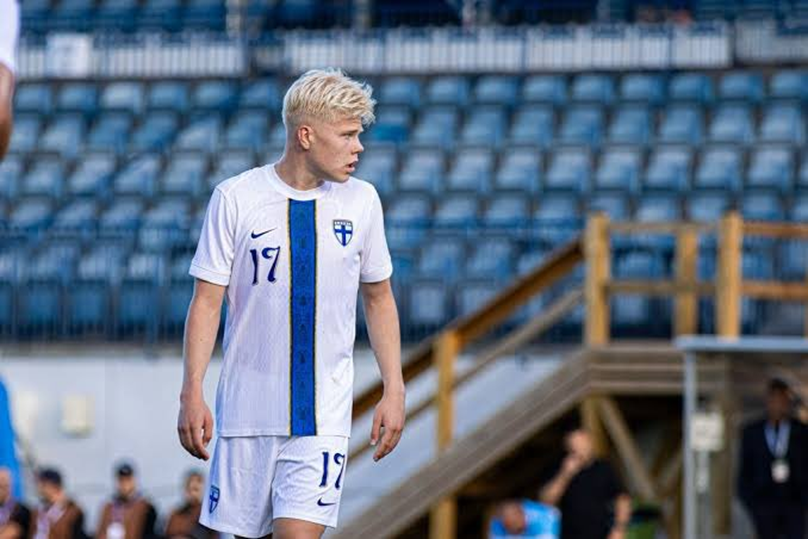
Born January 31st, 2006, Otto Ruoppi was welcomed into the world in his hometown of Kuopio, Finland. Growing up in the regional capital of North Savo, with a population of roughly 125,000, this is all Otto knows…homegrown lad who started his football career in his very own backyard. After playing youth football around his hometown, Ruoppi signed with the hometown club Kuopion Palloseura (Commonly referred to as KuPS), a professional club based in the topflight of Finnish football (The Veikkausliiga). A historical club in Finland who have tallied 7 Veikkausliiga championships, 5 Finnish cup wins, and one Finnish League Cup win. This places them fourth all-time in the Finnish Premier League honor table. Otto Ruoppi, in 2021, at just 15 years old, started his senior career with KuFu-98, the club’s reserve team (at that time), playing in the third tier of Finland, the Kakkonen. Ruoppi made 11 appearances for the team before going back to KuPS II in 2022 to develop for the rest of the season, making 15 appearances and bagging 1 goal under them. This prompted KuPS to make one more developmental move for Otto, and they sent him on loan for the whole of 2023 to Mikkelin Palloijiat in the 2nd division of Finland, the Ykkönen. Otto Ruoppi made 30 appearances for MP and put together 2 goals and 1 assist. All while also seeing MP surprisingly finish 3rd place in the Ykkönen league. After what looked like a successful loan, KuPS brought Otto back, and on April 6th, 2024, Ruoppi debuted in the Veikkausliiga with KuPS first team as a starter. Otto took that starting spot and never gave it up. Scoring his first goal the following game against IFK Mariehamm, this was enough to rope in a contract extension with his boyhood club until 2028 and to continue the early dominance he had been showcasing. Now following Otto’s sophomore season, he now has 95 appearances for the club, all while tallying 18 Goals and 8 Assists during the last 2 years at just 18-19 years old. It’s only a matter of time before someone or some team wants shivers sent down their spine by Kuopio’s Koldest.
International Career:
Otto Ruoppi has made himself known on Finland’s national youth teams, being apart of the country’s U-16, U-17, U-18, U-19 and now U-21 national levels. The most notable honour of his national career was in 2023, where he led the Finnish U-17 national team to the final stage of U-17 Euro qualification. They played 3 games recording an even 1 win, 1 draw and 1 loss. Ruoppi scored 1 goal during those games and was a key component to their success. Now, in 2025, he is doing it again at the U-21 level where Finland have played 5 games for the UEFA European Under-21 Championship qualification, and he scored 3 times, while playing all 450 minutes of the 5 games. Loyalty, trust and talent is what he offers, and Finland feel safe with him on the pitch.
KuPS
When looking at KuPS and the philosophy that they play under Jarkko Wiss, the system lets Otto thrive and not only become a top player on his team, but in the league. KuPS seem to lineup in 3 separate formations during the year such as the 4-2-3-1. 4-4-2, and 4-3-3. The formations we saw the most of the three was the 4-4-2 and the 4-3-3. Regardless of the formation they take, they always seem to follow Jarkko’s strategy of having possession and getting numbers in the box. KuPS average the 4th highest possession in the league as a team with 55.9% and as well, 4th in the league in touches in the opposition box with 982 (158 away from first). These touches in the box have translated to 4th in big chances created with 78. With their philosophy of gaining possession and breaking down the opposition, they also do a good job of creating set piece opportunities to help get crosses into the box more. Again, 4th in the league in corners at 180, 5th in accurate crosses per match at 5.1 (while also attempting the 2nd most crosses in the league at 670 total), 1st in accurate long balls per match at 28.3, and 2nd in accurate passes per match at 465 (4 behind HJK). Again, like I mentioned, KuPS want numbers in the box, and by overloading the wider areas (playing 4-4-2 and 4-3-3 compliment the ideology) they tend to burn the opposition full backs and get dangerous balls into the box. This system has let Otto grow into his own, and OH, has it been a sight.
Otto’s Offensive Efforts*
Otto Ruoppi’s offensive game is where the lad shines. Ruoppi in this system, can play on the wing, as an 8 and get thrown up top as a number 9. Ruoppi always seems to be in the right place and always is providing ample support for his team in attack. Otto likes working further up the pitch and does a tremendous job in working the half spaces, overloading the wider areas, and getting into the box successfully untouched. If the ball is switched to the other side, Otto is inherently moving up and standing in and around the penalty box. This offensive nature has translated into an eye-opening season. For his team, KuPS, he is leading them in a plethora of stats and indicating that he is their heartbeat on offense and is only getting better. Otto is now currently in the top 15 of highest rated players in the Veikkausliiga at 7.35 (per Fotmob), with some of the highest G+A totals in the league. For his team, KuPS, he is 1st in assists, G+A, big chances created, chances created and 3rd in highest match rating on the team. Otto’s chance creation and crossing ability is what makes him stand out from the rest. Otto has 4.97 touches in the opposition box Per90, 1.85 Chances Created Per90), and has a 34% successful cross rate from his 52 crosses attempted (5th on team in total crosses). These Per90 stats just help reiterate KuPS and Jarkko Wiss’ philosophy and show Otto can work wide and be one of the main focal points of attack centrally. Even in Conference League play, Otto has replicated some of those stats and still has looked great. The tougher competition has proved some challenge, but Otto still seems to provide and is shining for KuPS in their remarkable season they are having.
Otto Ruoppi Advanced Statistics
Veikkausliga 2025-26
Conference League 2025-26
Goals + Assists
8 Goals + 7 Assists (Tied 8th in Veikkausliga for G+A, and 5th for Assists)
0 Goals + 0 Assists (KuPS tied for 5th lowest goals for in Conference League)
Chances created & Big Chances Created
49 Chances Created + 9 Big Chances Created (1st on KuPS for Chances & Big Chances Created & 7th Highest in the Veikkausliga)
7 Chances Created & 0 Big Chances Created (72nd in Chances Created)
Touches in Opp. Box Per90
4.97 Per90 – 90th percentile
4.17 Per90 (68th percentile)
Dribble Success Rate
43.9% (50th percentile)
70.01% (84th percentile)
Cross Success Rate
34.0% (84th percentile)
44.4% (88th percentile)
* All statistics in this section taken from Fotmob.
KuPS & Ruoppi’s Performance Against Crystal Palace
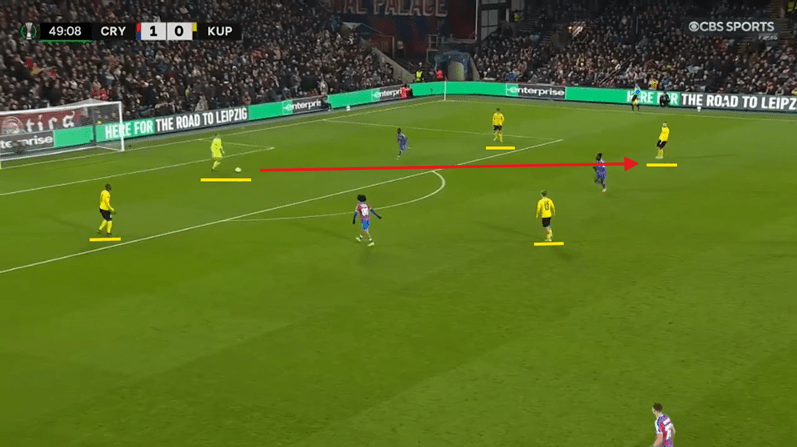
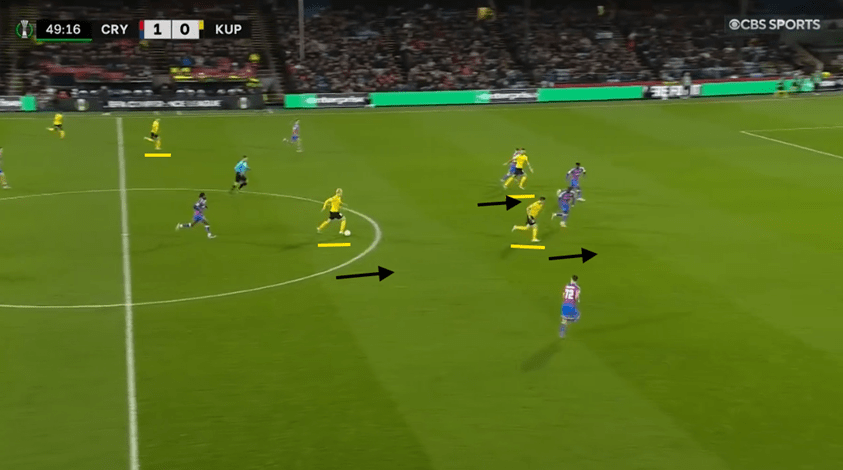
KuPS really tried to play to their philosophy under Jarkko Wiss in the match against Crystal Palace in the Conference League. Control possession/tempo, look to play out the back, play out wide, or stretch the defenders back far enough for our midfielders to find pockets of space to drop in, and then drive to the opposition goal. KuPS managed to scrape 44% possession against a Crystal Palace team who is primarily known for playing counterattack/direct football. Crystal Palace have struggled in recent times when having to put pedal to the metal and be the “dominant” attacking/possessive team. On top of not being as familiar as their normal play, they had a younger line up in, with tactical familiarity and leadership levels being down from usual. That is exactly how KuPS broke down Crystal Palace and lead to their first goal to tie the game 1-1.
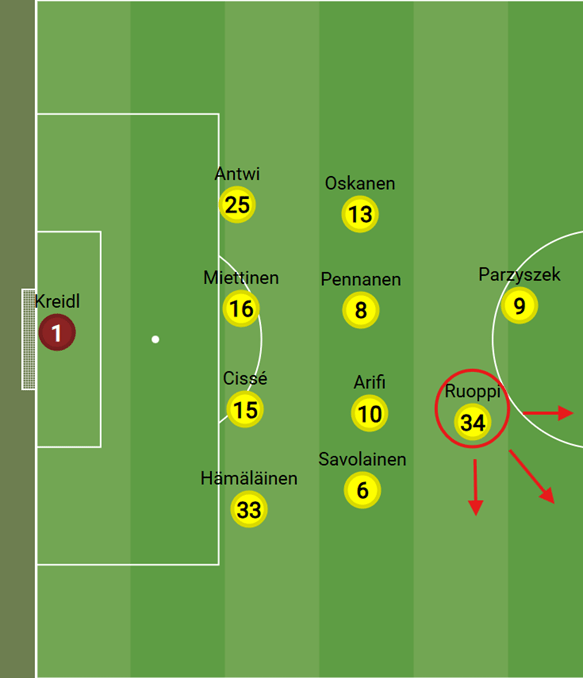
KuPS goalkeeper #1 Kreidl does an excellent job bringing in pressure from the Palace player and delivers a quick pass in space for KuPS CM #10 Arifi.
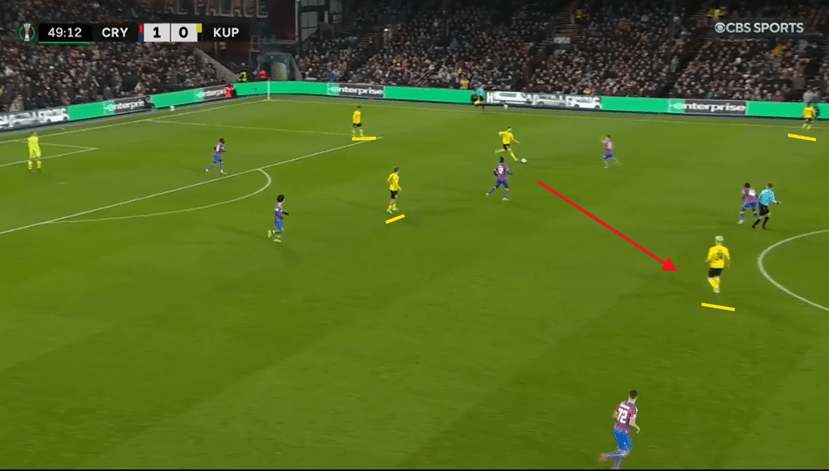
#10 Arifi quickly turning his body facing up field and scanning the areas, makes a great pass in between 3 Palace defenders, to find #34 Otto Ruoppi who does a great job finding space for his teammate.
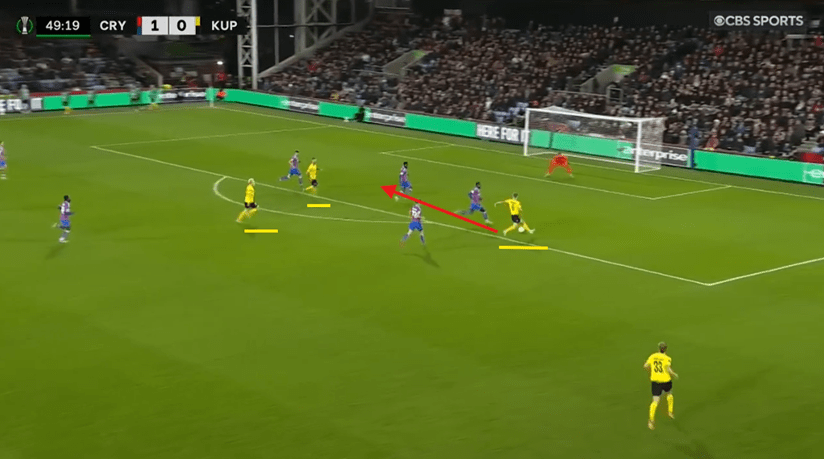
#34 Otto Ruoppi sees that he has space ahead of himself, with a great two touch and pushes directly up field with purpose. Great one/two step to get moving and spearhead the attack with 2 other teammates pushing the back line. (#6 Savolainen & #9 Parzyszek)
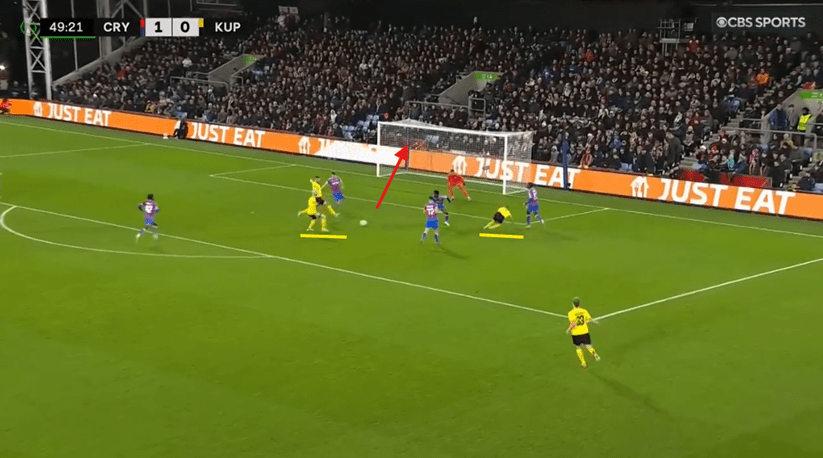
34 Otto Ruoppi finds his teammate #6 Savolainen with a good pass into the box who got space off Palace defender #23 Canvot.
6 Savolainen beats #23 Canvot on a move inside, then slides home a treat for KuPS striker #9 Parzyszek to draw the game at 1-1.
Ruoppi in KuPS’ Defensive Structure
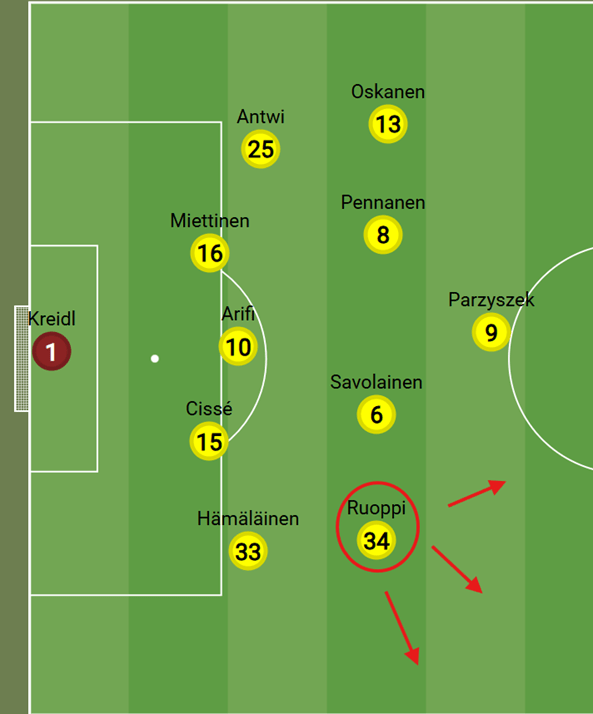
Defensively, KuPS played 5-4-1/4-4-2 from their original 4-3-3 shape to start the game. KuPS had Otto on the right striker side, up front pressing along side KuPS #9 Piotr Parzyszek. To start the second half, KuPS implemented higher pressing along Crystal Palace’s back line when they tried to play out the back. KuPS had one of their midfielders drop into a back 5, and then both wingers dropped down into the midfield to push Otto out wide on defense, or they threw both wingers out on the wide flanks and had Otto jump into 9 positioning to formulate the 4-4-2 shape we saw in the second half versus Crystal Palace. Both defensive formations relied on Otto’s work ethic and having him press hard on the wingbacks and the wide center backs of Crystal Palace’s back 3. Otto realized quickly that they would have to put pressure on the younger defenders to cause turnovers. Otto made 3 tackles in the game, 8 recoveries, 4 defensive contributions and all while maintaining a 50% ground duel success rate.
Ruoppi’s role within the 5-4-1 defensive structure:
Ruoppi’s role within the 4-4-2 defensive structure:
Otto’s Odyssey
Otto Ruoppi and KuPS have been phenomenal this season, and there must be praise on Otto’s side as the main facilitator in this offense. Not only does Otto pass the stats test, but Otto also passes the eye test just as thoroughly. Otto has a great future and has already made himself known in the Nordic world. With Otto’s tremendous work ethic and offensive game, any team should jump at the chance to sign him and develop him into the player we already see at this level, at just 19 years old. Otto’s best role(s) to play are as an inverted winger or attacking midfielder. Otto always seems to find himself in the box more centrally or moves more freely within the half spaces. Alas, obviously no person is perfect, and for Otto, he has some skills that require improvement to become the all-around midfielder he can be. For Otto, the two things that can develop to the next level is his tackling ability and physicality/athleticism. Otto is a taller lad at 180 centimeters and is 75 kilograms. By no means is this a small lad, but his tackling skills for that height/weight isn’t where I believe Otto can get to. Improving the timing of his tackles or his strength, would then in theory, hopefully help lead to more pressing/duel success. KuPS system would thrive even more once Otto fills out and grows into the man he can become. Lastly, Otto is on his way to becoming a more athletic player. Having a tremendous first step and amazing ability to quickly turn up the pitch to spearhead the attack. As he gets older, then his agility and pace can go to levels that would be beyond the Veikkausliga. Right now, Otto is a rising, up-and-coming star for the Veikkausliga and Finland. If he continues to see regular time for KuPS and continues training the way he has under Jarkko Wiss’ system, then we won’t seem him much longer in his hometown club’s kit. Otto Ruoppi’s talent trajectory can bring him to the top Nordic clubs around Europe, or Belgium as an influential starter, sooner rather than later. He can thrive in tactical systems that focus on possession or counter attacking, so the list of teams that can come knocking aren’t limited. If he is to continue to show the passion and work ethic Otto has now, but at the next step (whatever league that is), then I believe we can see Otto, at the peak of his career without barring any massive injury setbacks/team debacles, become a Serie A (Italy) or Ligue 1 (France) regular starter. Time is of the essence for KuPS Koldest, and Otto’s Odyssey will be adventurous just like the player he is.
Otto Ruoppi, coming soon to a European stage near you.
Having recently watched several matches of the Slavia Praha U19 team in the UEFA Youth League, it was at first clear that this group of academy players has several top prospects among them, and more articles on some of the other Slavia Praha U19 players will be forthcoming. However, it was Simon Sloncik that stood out the most as a rock in the Slavia defence.
Who is Simon Sloncik?
Simon Sloncik was born May 15, 2007 in Zlin, Czechia. His father, Petr Sloncik, was a former professional player in the Czech leagues and his older brother Tom is an attacking midfielder in the Viktoria Plzeň system. Both Sloncik brothers started their football careers in the Zlin youth system. Simon was scouted by Banik Ostrava, and joined their academy for a year before Slavia Praha brought him into their ranks. Still at just 18 years old, Simon Sloncik has been one of the best players in the Slavia B/Slavia U19 teams, and is showing significant promise. Standing at 1.89m, Sloncik already has a big frame that he could further grow into.
Technical Attributes:
In the matches I observed, Sloncik showed a very strong level of technical ability, both on and off the ball. He provides an additional level of confidence to his teammates with his reliability. On the ball, Sloncik has a reliable short passing game and a strong first touch, leading to him rarely being put in situations to give away the ball. He showed some aptitude for progressing the ball through carries/dribbles, with room to further improve in this aspect. Sloncik showed an eye for the long ball, and even when his passes did not find their target, he chose opportunities where his teammates would have a good chance to win the second ball if the pass was not completed.
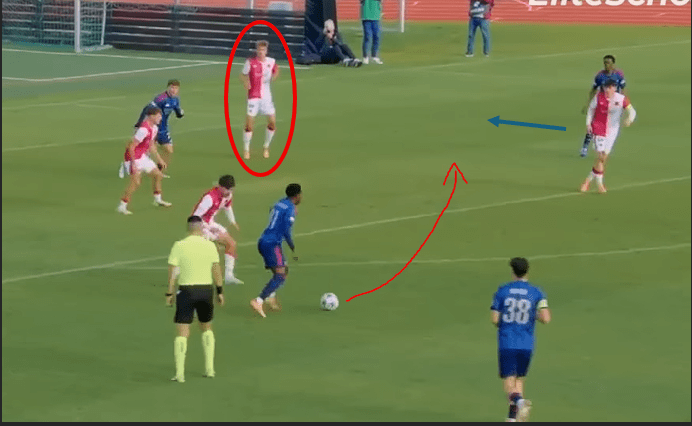
Off the ball, Sloncik was extremely impressive in his technical ability. His 1v1 defending, tackling, marking, and anticipation to make blocks were all best-on-the-pitch quality. In terms of the modern CB, Sloncik has the technical foundation desired by the majority of managers across the top leagues. Sloncik showed great use of angles and body position to effectively prevent his man from getting a scoring opportunity, as shown below in an example from his match against Arsenal U19.
Example: Defensive Reading / Technique:
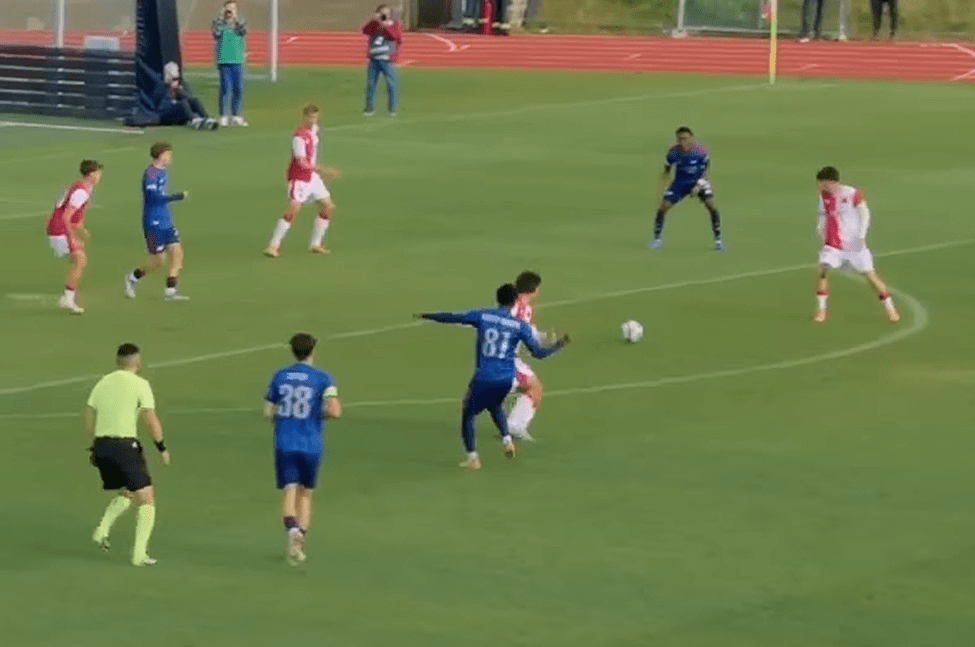
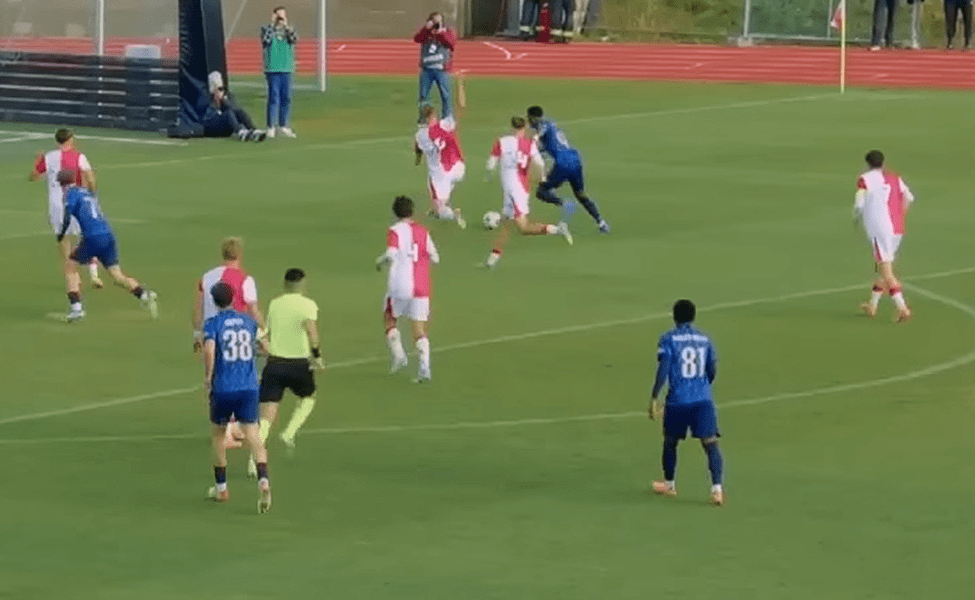
Sloncik recognizes the pass about to be made, realizes he cannot intercept it and doesn’t overcommit trying to do so. He waits for his opponent to take their first touch towards goal before fully committing to the ball, making an impressive block.
Mental Attributes:
Sloncik demonstrated calmness and composure on the pitch beyond his years. He clearly is the player organizing the Slavia defence, and uses his strong reading of the game to communicate adjustments to his teammates. In terms of apparent attitude, Sloncik carries himself like a veteran, leading his team by example with an incredibly high level of concentration and communication throughout the match. I rarely saw Sloncik overcommit and draw himself out of position; he was almost always in the right place to make a key interception or block. Sloncik plays for his teammates and does not show any signs of selfishness in his game. Overall, I was very impressed by the professional mentality and composure shown by Sloncik. He has all the attributes required to be a real leader from the back at senior team level.
Physical Attributes:
As previously mentioned, Sloncik is 1.89m tall (about 6’2″), and has a strong, while not bulky, frame. At just 18 years old, there is still plenty of time for him to reach his physical peak. With that in mind, the level shown by Sloncik already is very impressive for his age. While playing at the U19 level, Sloncik is regularly one of the more imposing figures on the pitch. He has solid pace/acceleration – while he might not beat out Micky van de Ven in a race anytime soon, he certainly has the foundation to reach a solid Top 5 League level. Sloncik showed aerial dominance at U19 level, but with signs that it can translate to senior team level. His height, strength and jumping ability make him a regular set piece threat in attack, and a strong aerial defender. I did not see him lose a single aerial duel at U19 level.
Overall Summary and Potential:
Based on the matches I observed, Simon Sloncik is currently capable of being a regular starter in a Top 8-15 European league. In 3 years time, he has the potential to play in one of Europe’s Top 5 leagues/be at a UCL-level. Sloncik’s time in the Slavia youth team will certainly be coming to an end soon, I would not be surprised to see him make his mark in the senior team quicker than expected and start getting some attention from Europe’s top leagues. Sloncik looks like a near-certain lock to be a Czech senior national team player in the future, and is quite the exciting CB prospect! Simon Sloncik is One to Watch.
While Burkina Faso may have seen their U17 World Cup hopes ended at the hands of Italy today, it takes nothing away from their impressive performance at this tournament and specifically the performance of Mohamed Zongo.
The attacking midfielder/winger, who will turn 16 years old in just a few days, had a standout performance for Burkina Faso at the U17 World Cup. With two goals and three assists, Zongo was a constant threat in the Burkinabe attack. Full of flair and with a magical left foot to complement it, Zongo can provide or score all the same. What stood out to me while watching is how deceptively powerful his ball striking is. On several occasions, it would look like Zongo was about to deliver a chipped cross, floated to the back post, only for an incredibly powerful shot to come off his boot instead. He showed the ability to put a good amount of curve on the ball, even at high-pace delivery. His goals against Czechia and Germany were a fantastic demonstration of ball-striking ability. For such a young player, Zongo has very impressive technical and physical ability.
Zongo is light on his feet and very agile on the ball, being a constant nightmare to opposing fullbacks in this tournament. His pace and acceleration were solid, not game breaking, but this is not something to judge him on at 15. He showed a good eye for identifying dangerous spaces to move into, and provided strong supporting runs for his teammates while in possession. Out of possession, Zongo looked to put in a high level of effort, and from what I could observe, seemed coachable and responsive to touchline instructions.
While mostly starting as a RW for the Burkina Faso U17 squad, Zongo clearly has the abilities to play more centrally as a #10, and often drifted inside onto his preferred left foot. As he still plays his club football in Burkina Faso, this U17 World Cup is the first I and many others have gotten to see of him, and I’m sure there will be several European clubs shortlisting him as one for the future. The right development path will likely be a significant part of his decision on where to sign, when that happens. At such a young age but having already shown very impressive ability, whichever club signs Zongo will have to be careful to bring him up the ranks at the right pace. He would still be eligible to play youth football for another 4/5 years, but it seems likely that he will make a senior debut sooner than that.
I wish Burkina Faso had advanced so I could have seen more of Mohamed Zongo, but he truly impressed and I see a lot of potential. With time on his side, just remember the name, as Mohamed Zongo is one to watch.
Hello everyone, an international break is upon us again, so I thought I’d take the time to point out some of the more exciting players who could be in line to receive their first cap for country over the next weeks. Now having been scouting the U21 Euro tournament, I got to watch several of these players play at this summers tournament. Here are some of my favorite potential first cap selections from the latest team selections.
England: Djed Spence and Elliot Anderson
Both players made a case to be in the England squad last year, and are now receiving slightly overdue callups. Elliot Anderson had a strong season after moving to Nottingham Forest from his boyhood club Newcastle, being pulled back from the #10 role he was asked to play previously and succeeding as a left sided #8 under Nuno. Anderson is a real all-round midfielder; last season he averaged 8 duels won p90, 1.2 dribbles p90, and 0.2 assists p90. At the U21 Euro he played in a double pivot for England and was England’s metronome, dictating the tempo and getting a lot of touches. Anderson’s future is bright, and his callup is well deserved.
Djed Spence has really pushed on over the past year and become one of the Premier League’s best fullbacks. There might not be another fullback in the league who has such a high level of ability on both sides of the ball. “Bring me your favorite winger,” Spence posted on social media after another strong performance against Manchester City where he nullified Oscar Bobb, showing his confidence is reaching new levels. Defensively, he has been performing at a very high level, and going forward he offers unpredictability and goal threat from fullback. Able to comfortably play either side of the pitch, this is a smart selection for Tuchel.
Spain: Jesús Rodríguez
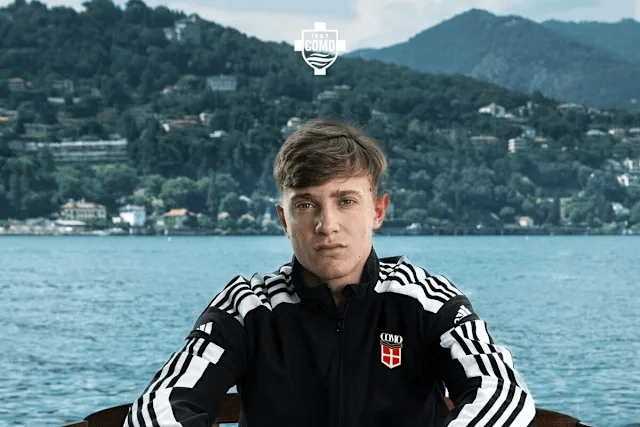
Another player who I had the pleasure of watching at the U21 Euro, Spain’s new LW callup, Jesús Rodríguez, is having himself quite the past few months. A graduate of the Real Betis academy, Rodríguez played only one full season for the Betis senior team before Como made him their club record signing for 22.5 million euros. If you like wingers with flair and tricks, then this is the player for you. One thing has been consistent in Rodríguez’s career so far: he will take on defenders, no matter what level he is playing at. Last season for Betis, he averaged 2.4 successful dribbles p90 and over 3 fouls won p90. This style of play caught the eye of Cesc Fabregas at Como, and of Luis de la Fuente, who rewarded Rodríguez with his first senior callup this international break. If he is given his first cap, expect him to make the most of it.
Germany: Nnamdi Collins and Paul Nebel
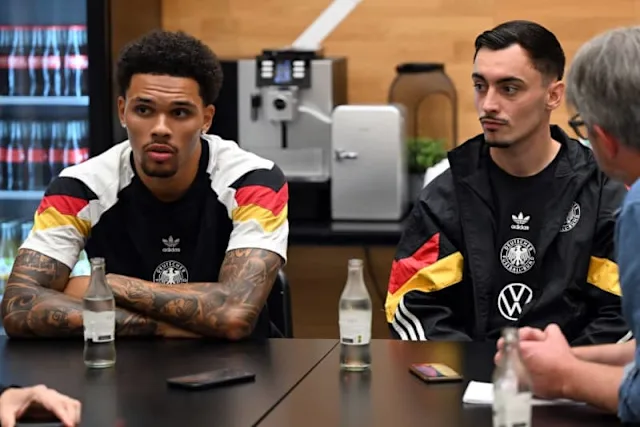
Both representatives of the German U21 team at this past summer’s Euro’s, Eintracht Frankfurt defender Nnamdi Collins and FC Mainz 05 midfielder Paul Nebel have both received senior callups and have the opportunity to gain their first caps. Collins, a rapid defender who can play as a CB or on the right flank, was in contention for best RB of the tournament at the U21 Euro. He had the most touches of any defender in the tournament, being a key player in buildup and showing a strong passing range. Collins averaged 2.3 accurate long balls p90 and 1.13 chances created p90, while also showing strong dribbling metrics. This season at Frankfurt, he has mostly played at CB, with his strong pace and technicality making him a productive ball-playing CB.
Collins (left) and Nebel (right) at Germany training camp – credit: Yahoo Sports
Paul Nebel really caught my eye at the U21 Euro, as I had not heard too much about him beforehand. Enjoying a breakout season at Mainz (his first full season in the first team) in which Nebel contributed 10 goals and 5 assists. While small in stature, Nebel seems to just slip away from stronger defenders, using his superior agility to his advantage. He is adept at long passing and switches the play very effectively. Out of possession, Nebel presses like he’s been deprived of ever getting to kick a football before, covering a lot of space in the midfield. He averaged 1 successful tackle and 5 recoveries, along with 4.5 duels won p90 in the Bundesliga last season. Julian Nagelsmann clearly sees something in him, and it will be exciting to see what Nebel can do in the senior team if given the opportunity.
Denmark: William Osula
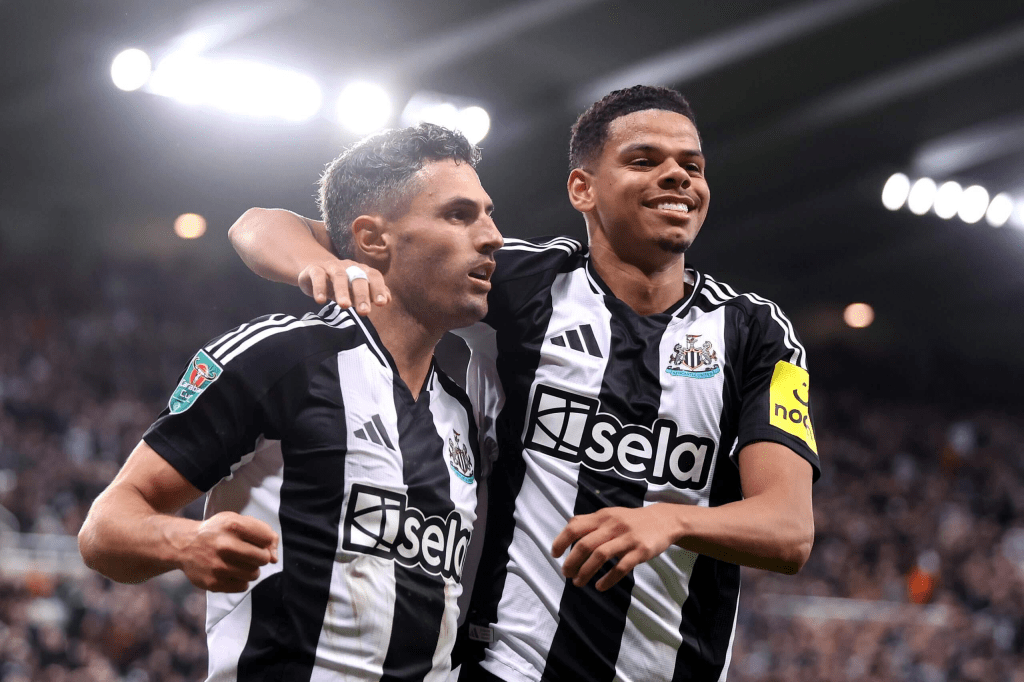
Osula was one of my favorite strikers that I saw during the U21 Euro’s when he lead the line for a very successful Denmark team. Osula scored 3 and assisted 2 in 185 minutes played at the tournament. His workrate and pressing is top notch, and has already shown that he can score in the Premier League for Newcastle this season. There are a few players at ST with seniority over Osula, and his first cap may be dependent on the game state in Denmark’s two matches this international break. If not now though, Osula’s breakthrough into the Danish national team seems imminent.
France: Maghnes Akliouche
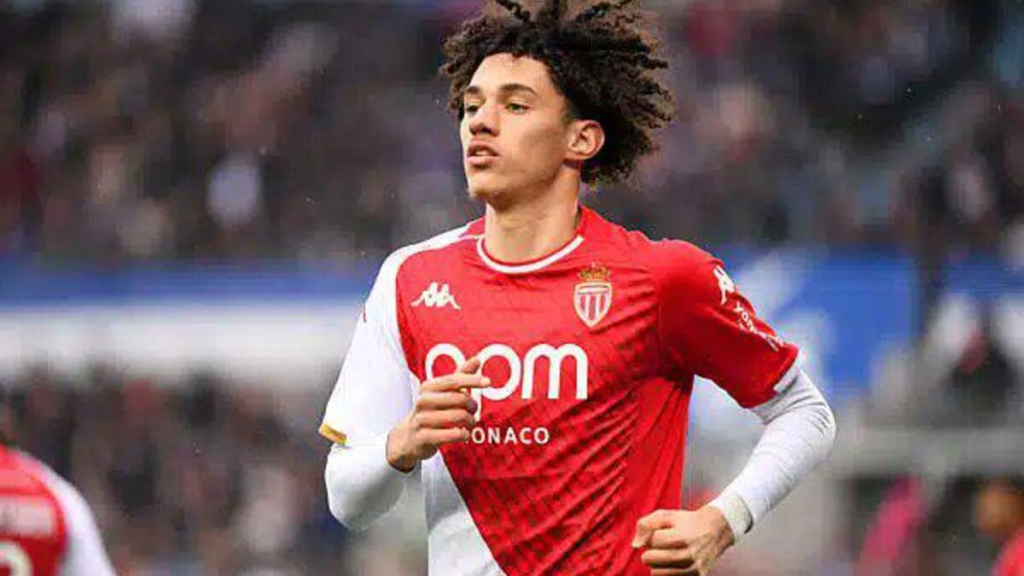
Monaco’s breakout star Maghnes Akliouche has shown quite a rise in his play over the past year. Deployed as an attacking midfielder or winger, he featured 43 times for Monaco last season across all competitions, scoring 7 goals and adding 12 assists. In Ligue 1, Akliouche provided consistent xG and xA numbers, averaging out to around 0.6 expected goal contributions p90. He likes a dribble, and works hard out of possession to recover the ball fairly often. Through three matches in Ligue 1 this season, Akliouche has provided two goals and an assist, with over 1 expected goal contributions p90. Having been linked to clubs such as Spurs this past summer, Akliouche’s first senior callup will certainly help accelerate interest in him. While I haven’t had the chance to watch him play live yet, there are certainly signs of a potentially bright prospect here.
These are some of the recent uncapped players who have received senior international callups that I’m most excited to see in action! Check back later for more football articles on Futbird!

 futbird