You might remember I posted an article talking about the growing sense of discontent with Video Assistant Referees (VAR) amongst Norwegian football fans. Ever since VAR was implemented only a few years ago, the “VAR out” movement has grown steadily. A study of the 2024 season’s VAR was released by the Eliteserien, Norway’s top division of football, that showed the VAR was not as effective as it needed to be. VAR review times were extremely long, including one insane VAR review that took over 10 minutes. The calls made by VAR, when reviewed by the refereeing association after the matches, were not correct nearly enough. With this report, the facts were there for the Norwegian football fans to decide for themselves: is VAR worth keeping?
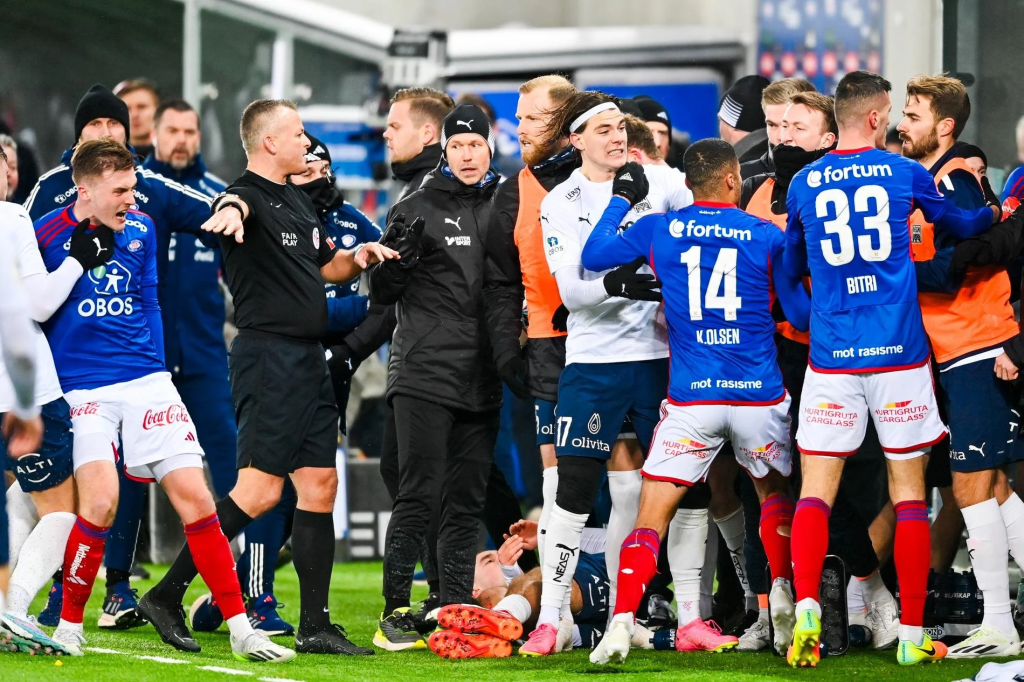
The major cons of VAR are the impact to the match day experience. The joy of celebrating a goal with fellow fans has been replaced by a hesitant wait to see if VAR will intervene and request a review. The lengthy wait times experienced in the Eliteserien caused consistent delays in the match. Fans were unhappy seeing the effects VAR had on their experience at the stadium. These very fans have voiced this disapproval in a significant way recently: at each club’s annual supporter’s group meeting, there was a vote held on whether or not they were in support of telling the club to vote in favour of removing VAR. Of the 32 clubs that made up Norway’s Topfotball (the top 2 divisions of Norwegian football), 19 of them voted in favour of removing VAR in Norwegian domestic competitions. While some clubs, Tromso, for example, openly appealed to their supporters to vote in favour of keeping VAR, their reasons for doing so were somewhat apparent. In the first season VAR was implemented in Norway, Tromso recorded their best ever league finish in club history. Coincidence? Perhaps.
Now VAR, in an ideal world where the vast majority of the calls it makes are correct, would be a welcome addition to any league. That is provided that the VAR review times are not extremely lengthy. Realistically, VAR should be aiming for a standard where they can complete their review within the period of time following a goal where play is stopped for celebrations and moving back to the centre circle to restart. So by this, I mean 30-90 seconds following the ball entering the net. If they are unable to definitively show that the call made on the field was incorrect within that time frame, then the call on the field stands. This would strike a good balance between being able to correct obviously incorrect calls, but to not ruin the matchday experience by delaying the game to check if a player is 1cm offside. (In the spirit of the offsides rule anyways, 1cm offside isn’t really offside. Its purpose is to stop players “cherry-picking” far behind the defence). However, that’s just my thoughts.
For now, I believe that if a league doesn’t have the budget to properly implement a quick and effective VAR system that can get the vast majority of the calls made correct, then the impact to the matchday experience shouldn’t be impacted with the addition of VAR. Norwegian fans seem to feel the same, but do their votes mean that VAR will be abolished? Not quite yet. This matter now goes to the Norwegian Football Federation (NFF), who will be faced with the choice of showing significant improvements to VAR, or abolishing it from the league entirely.
As someone who watches a lot of Norwegian football, the matchday atmosphere is really special. Fans sing and play music for the full 90 minutes, in some nostalgic style stadiums that rarely clear 15k capacity. Given the effectiveness of VAR that’s been shown in Norway, I think they would be better off removing VAR and preserving the atmosphere in the stadiums.
There is an interesting story coming out of Norway in the past few weeks, a real movement from the supporters groups to abolish VAR in Norwegian football. Now I’ll admit, it’s been a difficult story to research, as many of the Norwegian newspapers put their articles behind paywalls, and I do not speak Norwegian! A fair amount of translating went into this, but here’s what I know so far.
VAR was introduced to Norwegian football before the 2023 season. The Norwegian season runs from April to December, so we are approaching the start of the second year with VAR in Norwegian football. When VAR was introduced, it was done so immediately and without any consultation of the clubs or supporters, which the latter did not take kindly to. In fact, Norwegian football fans were so against VAR that they wanted to boycott the 2022 World Cup, as it was the first that VAR would be implemented in. Last season, the supporters groups of over 70 clubs organized a protest against VAR over two match weeks, where every match started with 15 minutes of silence from the crowd. As the 2024 season approaches, the frustrations with VAR have only seemed to grow, culminating in a motion that is being voted on by all Norwegian clubs to “work to abolish the use of VAR in Norwegian football”. The main reasons that Norwegian supporters are against VAR are the aforementioned way that VAR was brought into Norwegian football, as well as the impact on matchday experiences. The Eliteserien, Norway’s top division, does not have a global, or even European TV deal, with games being broadcast on Norwegian TV alone. This means that some of the biggest reasons VAR was wanted in leagues such as the Premier League do not apply in Norway. The Premier League is the most globally viewed league in world football. Therefore, every incorrect refereeing decision that fans are shown replay after replay of is scrutinized on a much larger scale, and the need for VAR to prevent those clear errors increases. It is important to understand the difference in perspective for a fan watching in a stadium vs. one watching at home on the television. When you are attending a match live, you will not see the extended replays that get shown on television broadcasts, and therefore an incorrect referee decision is much less obvious. Referee error is part of the game of football, and I don’t think any football fan would be in favour of a hypothetical robot referee that cannot make an error. For this reason, the larger an audience a league has on TV broadcasts, the more obvious refereeing errors become, and the more necessary VAR becomes. The Eliteserien is only broadcast within Norway, and as a result the matchday crowd become a much larger proportion of the total viewers of any given match. The matchday experience can be dulled by long VAR delays, anyone who watches the Premier League knows what I mean, and fans have every right to want fewer delays in the matches. Having the feeling of pure joy when your team scores taken away because you have to wait and make sure there isn’t going to be a VAR review has been one of the worst impacts of VAR’s inclusion in modern football, but how many times has this happened in Norway?
Based on an information newsletter circulated to the supporters of all Norwegian Football Federation (NFF) clubs taking part in the vote to begin removing VAR from the Norwegian game, I was able to find some useful statistics from the 2023 Eliteserien season. For context, an Eliteserien season is 30 matches long, with 16 clubs; this means there are 240 matches played in total.
1,662: Number of situations evaluated by VAR in the 2023 season. Of these situations:
1,304 (78.5%): situations evaluated immediately without any delay of game
358 (21.5%): situations checked more closely, requiring some delay, of these:
294 (82.1%): cases VAR determined the on-field referee was correct
55 (15.4%): cases VAR corrected the on-field referee’s mistake
9 (2.5%): cases VAR made the incorrect decision
Of all of the situations evaluated by VAR in the 2023 Eliteserien season, only 358 required any delay in the match, for an average of 1.5 per match. However, the longest delays were cases VAR corrected the on-field referee’s mistake. The NFF released the statistics for this too, showing that of the 55 situations VAR corrected a mistake, the on-field ref did not need to check the video screen on 25 occasions, which took an average of 48 seconds to review. For the remaining 30 occasions where the on-field ref did need to check the video screen, they lasted an average of 2 minutes and 2 seconds in delay. This truly does not seem like much of an impact on match proceedings, and compared to all other European competitions, Norway did in fact have the least amount of VAR interventions in the 2023 season.
Now I’m not a huge fan of how VAR has been implemented in many leagues, especially in England, where it seems like referees are now defaulting to letting the VAR make the decision when they aren’t 100% sure instead of potentially getting their decision overturned. The purpose of VAR when it was introduced around the world was to overturn “clear and obvious error”: a linesman missing a player 5 yards offside, the referee missing a clear violent act worthy of a booking, the ball crossing the goal line but the referee calling it out. If these criteria were kept to, we should see low numbers of VAR interventions across Europe and no extended VAR reviews: if it’s a clear and obvious error, it shouldn’t take 5-10 minutes to determine so!
Now I mentioned earlier the impact VAR has had on goal celebrations in the stadium, so how did VAR impact the goals in the Eliteserien last year? Of the 748 goals scored, 140 were studied more closely. That is almost 20% of the goals scored, but of those 140 reviews, 110 of them were completed without any delay to the match (before the team’s celebrations ended). Only 30 goals of the 748 scored last season had VAR reviews that required a delay of the game, with an average wait time of 29 seconds. About 1 in 25 goals required a VAR delay of approximately 30 seconds to confirm the correct decision, that looks like minimal impact to me. A refereeing decision was overturned by VAR once every 4.36 matches played.
What gives the NFF’s support of VAR credibility in my opinion is that they admit it’s shortcomings and have set out a solid plan to improve VAR’s use going forward. In this document I translated, the NFF point out one instance in Matchweek 15 of the 2023 season, in a match between Odd and Vålerenga, where a VAR review took nearly 7 minutes. This was immediately deemed unacceptable by the NFF for its impact on the match and the supporters, and changes were made ensuring a VAR delay of this length did not occur again for the rest of the season. The NFF also point out 9 occasions last year where VAR made the incorrect decision: 2 red cards incorrectly given, 2 goals that should not have stood, 3 penalties incorrectly given for handball, and 2 penalties incorrectly given for tackling. This is an average of one incorrect VAR decision for every 185 VAR reviews, well within the acceptable bounds of human error.
The last part from the NFF’s document to mention is the main proposed changes for the future use of VAR in Norway.
Strive for a maximum VAR review time of 2 minutes
Generally reduce the use of VAR, especially times the on-field referee must check the video screen
Increase the number of VAR cameras in each stadium to a minimum of 6
Ask assistant referees to flag clear offsides more often, rather than letting the play develop and relying on VAR to call offside
At the end of each season, both internal and external evaluations of the VAR system must be carried out, and Norway’s handling of VAR must be assessed compared to other nations
In the future, to consider the VAR technology specifically aimed at offsides and goal-line situations
Establish a long term dialogue around VAR with the NFF clubs and supporters
This is very promising to me, and shows that the NFF is thinking in the right way when it comes to improving VAR and the match experience. There are several key changes that will improve the match experience and reduce delays, not to mention the change in referee development in Norway moving forward. The NFF decided to develop VAR referees separately from on-field referees, meaning each referee will be dedicated to one or the other. Just like how the best on-field referees get given more games, the best VAR referees will be given more situations to review. The reasons for the supporters’ displeasure are clearly understood here. That being said, it is hard to tell what impact this credibility to VAR will have on the vote. Many supporters do not care if VAR has had a lesser impact in Norway than other countries, they want it gone, not reduced. So far, the supporters groups of the following clubs have voted in favour of the motion that their clubs should work towards abolishing VAR in Norway: Rosenborg BK, SK Brann, Vålerenga IF, Lillestrøm SK, Strømsgodset IF, Stabaek, and IK Start. In Rosenborg, Brann, Vålerenga, and Lillestrøm, some of the biggest clubs in Norway with the largest supporter bases have voted to remove VAR. On the flipside, the boards of several clubs have released statements in favour of VAR urging their supporters groups to vote no to the motion. In the most entertaining fashion, Tromso IL’s board released a statement saying they are in favour of VAR largely in part to the team achieving an all-time best finish of 3rd in the Eliteserien in the first season with VAR. They want their supporters to vote no to the motion, but the vote has not taken place yet just like in nearby Bodo, who’s supporters group vote will happen on this coming Monday. The clubs who’s supporters groups have voted against the motion to remove VAR (many due to pressure from the club board) are: Viking, Odds BK, Molde FK, Kristiansund BK, and Aalesund FK. The most influential member here is Molde being in favour of VAR.
Over the next few weeks the rest of the supporters groups should vote on this issue, and we will see what the consensus is! VAR will continue in the Eliteserien through the 2024 season, so any possible changes would be in effect for the 2025 season. This could be the start of a larger movement to bring the leagues with grassroots origins back to those roots. At the end of the day, football is a place many fans go to celebrate in the good times, and commiserate in the bad times. Sometimes those human emotions matter more than getting every call inch-perfect. I’m not saying to remove VAR from the biggest competitions in world football, but maybe a fan going to watch his local club in Norway doesn’t want VAR telling them when they can and can’t feel emotions. Just something to think about.
Thanks for reading, hope this has inspired a deeper thought on VAR and how we should be using it.
Time flies, it feels like yesterday that I was writing my Eliteserien PRE-view article, excited for the season to start. I did my best to predict how this season would end up, but as always in football, there are unpredictable twists and turns around every corner! The squads of players that I based my predictions on were not always the same squads that finished the season, with some surprising sales of the Eliteserien’s most dominant players. Teams I thought were showing some promise really underperformed this year, and there were also some unexpectedly high finishes for clubs like Brann, Tromsø, and Strømsgodset! I’ll be going through all of the action from up north this year in my 2023 Eliteserien Review. Thanks for reading, I hope you enjoy!
Part 1: The Story
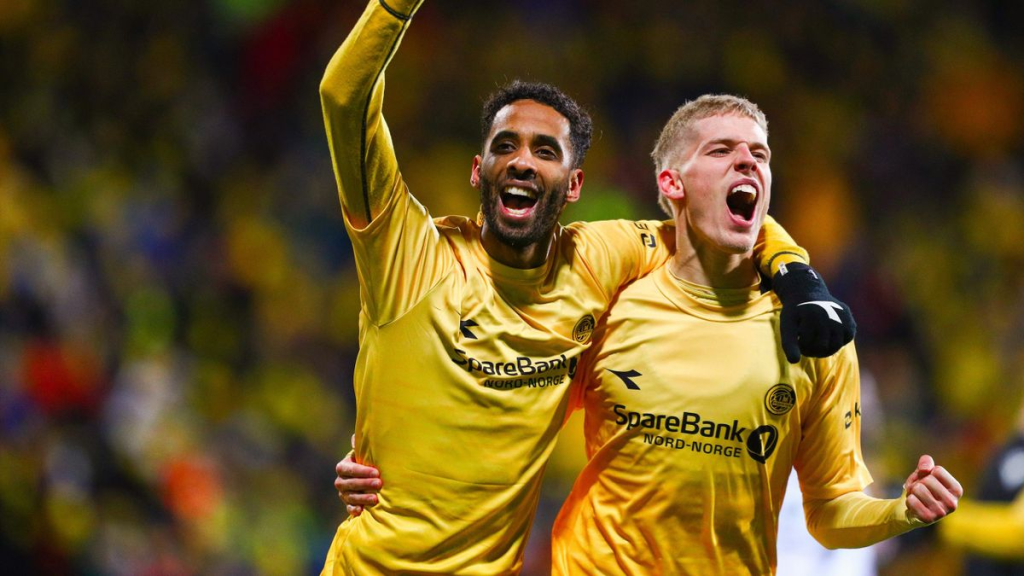
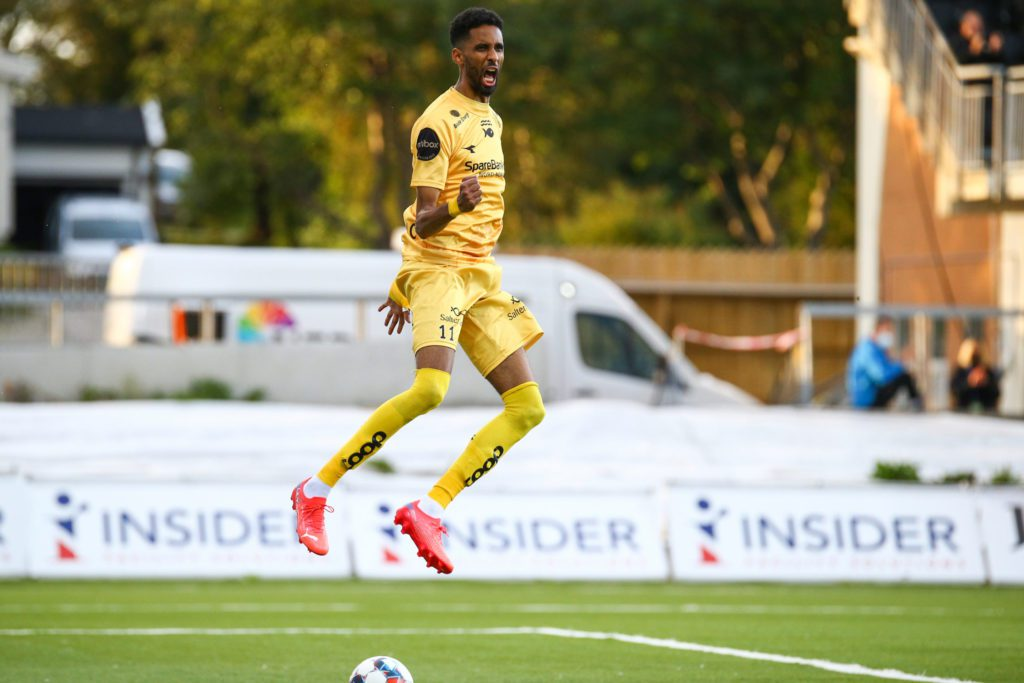
Before I can get too far into the finer details, the story of the 2023 season must be shared. Bodø/Glimt are your 2023 Eliteserien champions! I won’t try to hide my joy at this, being a Glimt fan myself, but I will speak without bias here. Through the first half of the season, Bodø/Glimt were flying and looked untouchable. 13 wins, 2 draws and only a single loss coming in Matchweek 12 vs. Strømsgodset through their first 16 matches and boasting a +27 goal differential. Amahl Pellegrino was in fine form again this campaign, producing several goal of the season candidates from his wide variety of strikes this season to lead the way. The scoring was spread out for Glimt however, with Faris tallying 15 goals, and the midfield duo of Albert Grønbaek and Ulrik Saltnes combining for 15 goals between them.
At the midway point of the season, Bodø/Glimt held a 6 point lead over Viking in 2nd place, with Tromsø, Molde, and Brann close behind. The title race would become more intriguing when the European qualifiers began for the clubs competing in them: in Matchweek 16 and 17, the leaders Glimt lost back to back games, after having only lost 1 in their first twelve. These losses were to Tromsø and Viking, who were sitting in 2nd and 3rd place waiting for an opportunity to take the league lead. Viking did just this, taking 1st place from Bodø for the first time all season!
Following their win over Glimt, Viking went on to claim 13 points from their next possible 15 to maintain 1st position going into Matchweek 24, with the two northern teams close by. In Matchweek 25 however, Viking’s title challenge came to a crashing halt vs. Tromsø with a 3-4 loss, thanks to a 94′ winning goal from Yaw Paintsil. This allowed Bodø/Glimt, who were midway through qualifying out of their UEFA Conference League group, to retake top spot, where they never looked back. Viking would not be able to regain their fine form from earlier in the season, going on to lose their next two matches and drop out of the title race, leaving it to be contested between Bodø/Glimt, Tromsø, and Brann.
Tromsø picked up Viking’s momentum, adding a 4-1 win over Molde in their following game to pass Viking, but then had their own title hopes dashed by a 0-1 home loss to Strømsgodset, leaving SK Brann as the final team with a chance to take the title from Bodø/Glimt. With 4 games to play, a shocking draw against Sandefjord for Brann meant that Glimt had a 9 point lead over Brann, and the two teams would play on the penultimate match week of the season in what could have be a title deciding match. It COULD have been a title deciding match, if Bodø dropped points in the 2 games prior. The must win matches for the yellow flash were against Stabaek and Aalesund, the two teams who ended up being automatically relegated in 15th and 16th places. A 4-0 away win at Stabaek set up a home game vs Aalesund with a chance to secure the Eliteserien trophy. The Aalesund keeper, veteran Sten Michael Grytebust, had nearly 2 xG on target prevented in the match and did everything he could to get a result. However, his heroics were not enough, as a Nikolai Hopland own goal was enough for Bodø/Glimt to take a 1-0 win at home and celebrate winning their 3rd title in 4 years in front of the Aspmyra fans. If you’ve only been paying attention to Norwegian football in recent years, you’d be forgiven for thinking that Bodø/Glimt have always been a dominant force. This is most certainly not the case, as Glimt was playing in the 2nd division of Norwegian football as recently as the 2017 season. In 6 years since reaching the Eliteserien, Glimt have earned 3 league titles and finished in 2nd place twice.
The work done by Kjetil Knutsen here cannot be understated, as he has helped take a relatively small club to a domestic powerhouse who can challenge even the best clubs in Europe (don’t forget that the great Jose Mourinho’s worst ever match he managed, in his own opinion, was his 6-1 defeat at Aspmyra to Glimt). Despite losing their best midfielder, Hugo Vetlesen, after 11 matches played to Club Brugge, Bodø/Glimt always looked a strong favorite for this title and were able to avoid any shock defeats to finish the job. I’ve embedded a lovely video from Morten Mella (thank you for this, Morten), showing the scenes of celebration from Bodø/Glimt’s final home game of the Eliteserien season.
Part 2: The Good, The Bad, and the Final Table
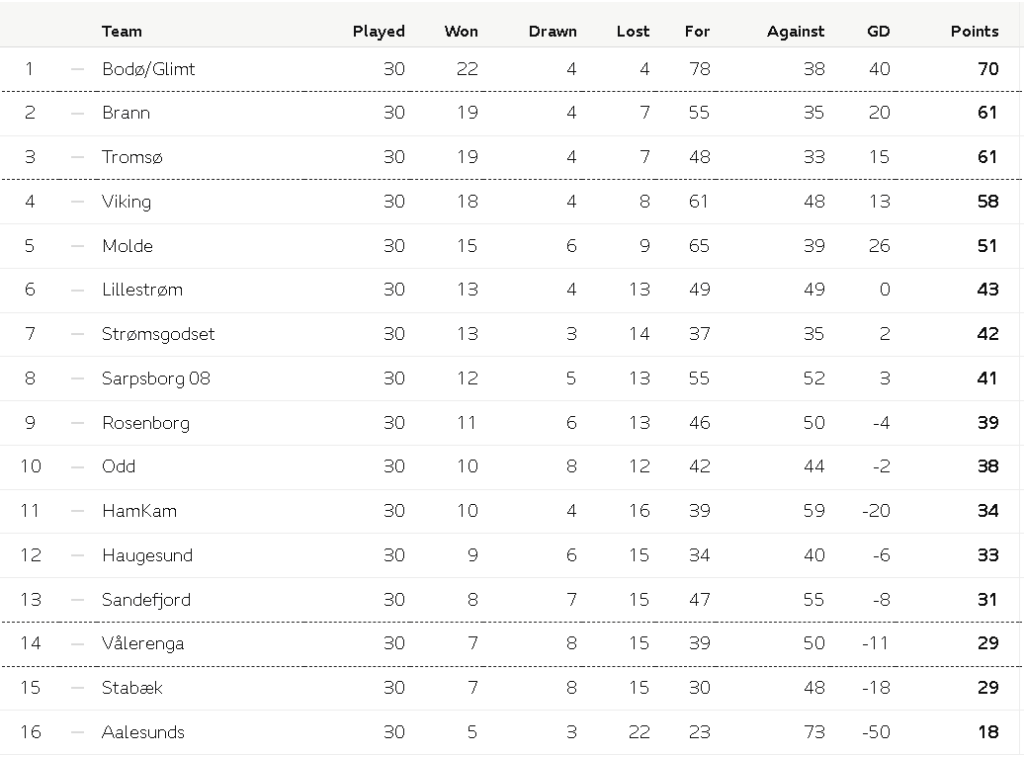
Here we can see the final league table from the 2023 Eliteserien. Glimt finished with a 9 point gap over Brann and Tromsø, who could only be separated by goal difference. The top 3 finishers in the Eliteserien are rewarded with UEFA qualification spots: for the champions, a spot in the UCL qualifiers, and for the 2nd and 3rd place teams, a spot in the Conference League qualifiers. The final UEFA qualification spot (Europa League) goes to the winner of the domestic cup, the NM Cupen, or the next highest placed team if the cup winners also won the league. This year’s NM Cupen final was contested between Bodø/Glimt and Molde. A win for Glimt would mean that Brann receives the Europa League qualification spot, and the final UECL qualifying spot would go to 4th place Viking. A win for Molde would salvage what they surely considered to be a disappointing season and reward them with the Europa League qualification spot. In the end, Molde would end up winners on an 89′ goal in a 1-0 fixture, securing themselves a spot in next years Europa League qualifiers.
This result was the final blow to Viking fans’ dreams of Europe after what has to be considered an overachieving season for them, regardless of the heartbreaking finish. Viking were the team to pace Glimt through the majority of the season, only to have their hard work undone with a run of 7 points through their final 8 matches, culminating in a 5-1 loss to Rosenborg at home on the final day of the season to ensure they would finish 4th. For a team that spent more weeks on top of the table than any other club not named Glimt, Viking will feel they deserved more from this season.
Another club that had a more successful season than previously anticipated was Strømsgodset, who turned out to be the giant-killers of the Eliteserien this year, earning them a 7th place finish! Generally considered as more of a “player-development” club within Norway, Strømsgodset showed that they have the ability to win right now. Against this years’ top 5 teams, Strømsgodset scored 11 goals, while only conceding 9 and earning 14 points from a possible 30! Strømsgodset only lost a single home game to the top 5 teams this year, being a 1-0 loss to Tromsø, and earning 10/15 points from these home matches. For a team that didn’t look the strongest on paper, especially considering that their brightest prospect, Tobias Gulliksen, was sold to Bodø/Glimt midseason, Strømsgodset should be very proud of how they represented themselves this season and could look to build on this success with some smart transfers.
Not all clubs had an overachieving season though. Three clubs who finished significantly below where I thought they were capable of are Rosenborg, Odds, and Vålerenga, the latter actually finishing in the relegation playoff place! Often as is the case in a league like the Eliteserien, a club’s best players will receive offers to move on to bigger leagues fairly quickly after arriving in Norway at times. The main reason for Odds mediocre finish was the sale of their starting keeper Leopold Wahlstedt to Blackburn Rovers. Wahlstedt was, in my opinion, the best keeper in the Eliteserien this season before he was sold, and this showed in Odds results. After conceding 19 goals in 17 matches with Wahlstedt in net, Odds went on to concede 25 goals in the remaining 13 matches following Wahlstedt’s departure. That’s an increase in goals conceded per game from 1.12 to 1.92, showing Wahlstedt’s quality and consistency between the sticks.
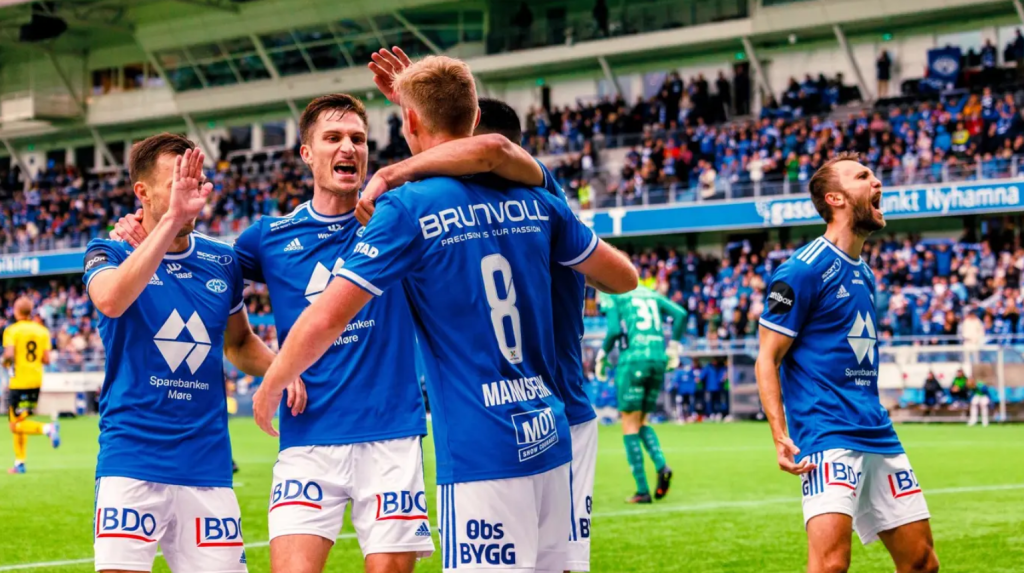
An honorable mention for underperformance has to go to Molde, included here as they suffered from the same player sales that Odds did, except Molde sold both of their best players. Ola Brynhildsen, Molde’s rapid centre forward who scored 2 goals on Bodø with his team down a man to secure a 2-2 draw against all odds, was sold to FC Midtjylland for 2.5M euros. Sivert Mannsverk, the anchor of Molde’s midfield and a young defensive midfielder with all the potential in the world was picked up by Ajax for a 6M euro fee. Their most consistent CB of last season, Birk Risa, was sold to New York City in MLS for only 1M euros. To top off the (in my opinion) bad transfer business, Molde let their top defensive prospect go to Wolfsburg for free! Anders Børset, a 17 year old defender who can play at CB or LB, looked to have sky-high potential, and could have likely been sold for millions of Euros if they kept him at the club. All of this culminated in a very unimpressive 5th place finish in the Eliteserien, with the NM Cup win being the only positive from Molde’s season. Perhaps we will see them spend some of this money before next season to revamp the squad!
The final two underachievers from this year on my list are Rosenborg and Vålerenga. Rosenborg went into this season having sold two of their best forwards in Casper Tengstedt and Emil Ceide. Reinforcements were minimal, in the form of Canadian Jayden Nelson to replace Ceide, and Ole Selnaes brought in from FC Zurich to bolster midfield. The goalscoring numbers certainly took a hit with the loss of Tengstedt, with Rosenborg’s two main strikers, Ole Christian Saeter and Isak Snaer Thorvaldsson combining for 13 goals in the season. Tied for 2nd place on Rosenborg for goals scored is 16 year old midfielder Sverre Halseth Nypan.
It is both a negative and positive that he is one of Rosenborg’s top scorers. A negative because no club should be relying on a 16 year old midfielder to be your 2nd leading scorer, but a positive because this is a 16 year old midfielder who is the club’s 2nd leading scorer this season! I cannot say enough positives about Sverre Halseth Nypan, he is an incredible player to watch. Possessing a calmness and composure far beyond his age, Nypan looked extremely comfortable playing in the Eliteserien this year, playing in 23 matches and contributing 5 goals and an assist. I don’t believe we’ve seen a player so young seem at ease playing in the Eliteserien since Martin Ødegaard made his debut at 13. Nypan also dribbles with his preferred left foot, and the way he moves on the pitch is drawing more comparisons to Ødegaard than just his young age at debut. While Rosenborg shouldn’t be pleased with a 9th place finish, as one of Norway’s biggest and richest clubs, they should have the resources to rebuild their squad around their young talisman for the next few seasons.
The most shocking result of this season was Vålerenga IF being relegated to the OBOS-ligaen, the 2nd tier of Norwegian football, after finishing 14th in the Eliteserien, and then losing the promotion playoff to Kristiansund in heartbreaking fashion. After securing a 2-0 away win in the first leg, Vålerenga returned home and held their 2 goal lead for 75 minutes, before 76′ and 82′ goals from Kristiansund tied the series on aggregate and forced extra time. After extra time could not find a winner, the promotion playoff was decided on penalties, where every penalty kick was converted until Vålerenga’s final penalty, when Christian Dahle Borchgrevink was unable to convert his spot kick, sending Kristiansund up to the Eliteserien for the 2024 season. I expect an immediate return to the Eliteserien for Vålerenga next year following this unthinkable relegation, but nothing is certain in football!
Part 3: The Top Players
The 2023 Eliteserien player of the season in my opinion, has to be Amahl Pellegrino. In 29 matches, Pellegrino scored 24 goals and created 14 assists, breaking the Bodø/Glimt club record for most goal involvements in a season, set by Philip Zinckernagel in Bodø’s record setting 2020 season (19G + 18A). For context, Glimt scored 103 goals in the 2020 season, and in the 2023 season they scored 78. This means while Zinckernagel was a part of 36% of the team’s total goals, Pellegrino was a part of a whopping 49% of Bodø/Glimt’s goals this year in the Eliteserien. He scored in every way possible too, from taking corner kicks, volleys, even a strike from his own half that caught the keeper out. Pellegrino was pure magic for Bodø yet again, following up his 25G, 10A season last year with another stellar campaign. Enjoy this beautiful first touch and volley to the top-right corner vs Stabaek from earlier this season.
🇳🇴😍 Amahl Pellegrino (32) with an incredible goal for Bodø/Glimt over the weekend! The forward bagged a hat-trick vs Stabæk in this game. pic.twitter.com/Z3m0hlviLQ
The only player who was able to keep pace with Pellegrino for goals scored was Lillestrøm’s Akor Adams, who unfortunately for Lillestrøm, was sold to Montpellier midway through the season after he had produced 15 goals and 2 assists through 15 games in the Eliteserien. Bard Finne from Brann was the 2nd top goal scorer with 16, and Pellegrino’s teammate Faris Moumbagna was 3rd with 15 goals himself. Other Glimt standouts from this season were Albert Grønbaek and Patrick Berg, who were consistently performing at the level of a top top midfielder in this league. Grønbaek stepped into Hugo Vetlesen’s shoes seamlessly. In his first full season in the Eliteserien, Grønbaek produced 9 goals and 7 assists while being the team’s main threat to progress the ball through midfield, and will be subject to plenty of transfer rumours in the January window ahead of the 2024 season. It is likely that Glimt will not be able to hold on to the talented young Dane for much longer, with interest from clubs such as Leicester City in the EFL Championship, and Charlotte FC in the MLS on a potential 8M euro move.
As previously mentioned with Sverre Halseth Nypan, this was a year for breakout talents! Odds found themselves an exciting young winger in Faniel Tewelde, who only turned 17 years old in September and had the quality to play 20 matches for Odds this season. Tewelde and Nypan are by far the most advanced players of their age in the Eliteserien right now. Sverre Halseth Nypan looks every bit a successor to Martin Ødegaard in the national team, receiving his first U18’s callup this year, while Tewelde has played 11 matches for Norway’s U17’s this year and will soon follow Nypan.
Part 4: Conclusion
In the end, the 2023 Eliteserien title was contested mostly by 4 clubs: Bodø/Glimt, Viking, Tromsø, and Brann. Viking were the 2nd best club in Norway for the first half of the season, had their best form from Matchweeks 18 to 25 to lead the Eliteserien table during that period, before falling off to a 4th place finish. Tromsø and Brann did not look like much threat early on in the season due to Glimt’s impressive points pace, but the mid-season struggles due to Conference League fixture congestion lead to Glimt dropping points and making the title race more intriguing. The league was decided on Matchweek 28, when Bodø/Glimt won 1-0 at Aspmyra in front of their fans, and celebrated a historic 3rd title. Despite having to rebuild the squad nearly every year, Kjetil Knutsen has proven himself a top manager with Bodø, and if he isn’t lured away by the excitement of bigger leagues, the sky is the limit for this “village team” from northern Norway. I’ll be back soon with more football content from other areas of the world as the Norwegian domestic game takes a break, but will be sure to bring you all of the Eliteserien transfers and predictions ahead of the 2024 season. Thank you to everyone who has ready any of my content covering the Eliteserien this year, I truly appreciate it and will look to continue providing better analysis and insights into this wonderful league.
Welcome back football fans, I hope you’re ready to take a trip to Norway! All teams in the Eliteserien have played at least 10 games now, so I’d like to take a look at how the season is shaping up, the biggest surprises (both good and bad), and what might happen in the remaining 20 games. If you’d like to check out my Eliteserien season preview and see where I’ve been proven wrong, here is the link: (https://futbird.com/2023/03/18/2023-norway-eliteserien-preview/).
The League Table
Matches Played
W
D
L
GF
GA
GD
Points
Bodo/Glimt
11
10
1
0
32
9
23
31
Brann
12
6
3
3
24
15
9
21
Viking
11
6
2
3
26
20
6
20
Tromso
10
6
2
2
14
10
4
20
Lillestrom
10
5
2
3
18
16
2
17
Molde
11
5
1
5
24
16
8
16
Sarpsborg
10
4
3
3
12
11
1
15
Stabaek
10
4
3
3
14
17
-3
15
Rosenborg
11
3
4
4
14
15
-1
13
Odd
11
3
4
4
8
11
-3
13
Haugesund
10
3
3
4
10
15
-5
12
Stromsgodset
10
3
2
5
11
14
-3
11
Valerenga
10
3
1
6
14
17
-3
10
Sandefjord
10
2
3
5
12
15
-3
9
HamKam
10
2
1
7
10
26
-16
7
Aalesund
11
1
1
9
7
23
-16
4
Bodø/Glimt, Flying High!
What a start to the season it has been for the yellow flash from the North! 31 points from their opening 11 matches and a +23 goal difference has put Bodø firmly on top of the table with a 10 point lead over Brann in 2nd, who were the one team to take points from Bodø so far. That match required a bit of magic from Amahl Pellegrino to overturn a 0-2 halftime deficit and draw the match 2-2. It is also worth noting that Bodø started several substitutes in that match (and quickly realized their mistake, making changes and getting a point back). Speaking of Pellegrino, the left-winger has been in phenomenal form this season, seemingly scoring goal-of-the-season candidates one after another. “Pelle” as he is affectionately called at the Aspmyra, is leading the Eliteserien in goals… AND assists. With 12G and 5A through 11 games, this inspired form has been the driving catalyst behind Bodø’s early success. Brann’s Bard Finne is the closest competitor, amassing 13 goal contributions in his first 12 matches. New signing Faris Moumbagna has settled in well, notching 8 goals so far this campaign and proving to be the type of physical target forward who can create space for his teammates to score. Finally, the preferred midfield trio of Albert Gronbaek, Patrick Berg, and Hugo Vetlesen is unmatched by any team in the Eliteserien in my opinion, providing an ever-consistent base for the team to build on. The only imperfection this season was going out of the Norwegian Cup to Lillestrøm much earlier than expected, but as a result there will be less fixture congestion for the remainder of the year. Bodø/Glimt have been playing some beautiful football, and are strong favorites for the title this season. Who might be able to stop them?
The Contenders
Surprisingly, my pre-season title contenders have not lived up to expectations this season, Molde sit 15 points back in 6th place, Rosenborg are in 9th, and Vålerenga are flirting with relegation, sitting just one point clear of the playoff place. Accordingly, I owe some more respect to a few squads I had thought would be mid-table this season, but could put together a title challenge. Brann and Tromso are the two teams I believe have a chance to compete with Bodø/Glimt. Brann have proven themselves capable, taking points off of Bodø at Aspmyra, but also have losses to Odd and Sarpsborg which they will not be happy about. Also, a 0-0 draw at home to relegation candidates Sandefjord will not give reason for overconfidence. While I think Brann have showed enough to be considered a contender, they will need to clean up their inconsistencies if they are to keep pace with Bodø/Glimt.
Tromso are the more intriguing side in the race this year. Bodø’s northern rivals, Tromso have more motivation than any other side to prevent Bodø/Glimt from claiming their 3rd Eliteserien title in 4 years. They have also gotten off to a great start, able to move to 2nd in the table and 8 points behind Glimt by winning their next match. Suffering the same fate as their northern rivals in the Norwegian Cup (being knocked out by Lillestrøm), Tromso rebounded with a strong run of league form, only losing to Odd and Bodø/Glimt in their first 10 matches. In their upcoming schedule, we will see them tested: Starting on July 2nd, Tromso go through a run of having to face Lillestrøm twice, Rosenborg, Brann, and Bodø/Glimt all in a span of 6 matches. By the time I’ve written the Matchweek 20 Update, we will know whether Tromso has what it takes to be a contender this season.
Biggest Surprises
Good: Newly Promoted Teams – both of last seasons First Division clubs, Brann and Stabaek, have both performed much better than expected in their first season back in the Eliteserien, sitting in 2nd and 8th respectively at the time of writing. I thought the loss of Gift Orban would hurt Stabaek more than it has, and while their 14 league goals this season isn’t mind-blowing by any means, it is very respectable for a newly promoted side.
Bad: Last Season’s Success Stories – last season Odd and Valerenga finished in 5th and 6th place, 1 point apart. This year, Odd has plummeted to 10th place after their inconsistent start. Having beaten Brann, Tromso, and Molde this year, it is confusing to also see big losses to Sandefjord and Sarpsborg. In their wins, Odd are showing why they finished 5th last season, but when they play the worse teams in the league, their performance level has dropped catastrophically. (Sandefjord have scored 12 goals this season. 4 of them came in one game vs Odd).
Meanwhile Vålerenga is in an even worse place: 1 point from the relegation playoff. It has been an abysmal start for Vålerenga, who have only beaten Rosenborg, HamKam, and Aalesund; the latter two clubs being in the bottom 2 places on the table. The main issue for Vålerenga is their lack of scoring. No player has more than 3 goals so far this season, and their best chance creator has a combined xG + xA of 4.9 through 10 matches. When your statistically best player is creating around half of an expected team goal per match, your attack will struggle. For comparison, league leaders Bodø/Glimt have 4 players who have created as much or more xG + xA. If Vålerenga cannot turn around one of their worst starts in years, they may find themselves in trouble by the business end of the season.
Conclusion
If your eyes haven’t opened enough yet to read the whole article, here’s a quick summary: this year’s Eliteserien is Bodø/Glimt’s to lose, led by Amahl Pellegrino in the form of his life. Brann and Stabaek are overachieving so far, while Rosenborg, Odd, and Vålerenga are the biggest disappointments. The next 10 games will be crucial to determine how the league will shape up this season, so tune in! As always, thanks for stopping by.
Hello football fans from wherever in the world you are reading this! Since my Eliteserien season preview seemed to provide some unique content that was not covered elsewhere, I’ve decided to carry on with providing regular updates throughout the Eliteserien season, giving all readers the in-depth coverage in English that you would miss out on if you do not speak Norwegian. With that said, let’s take a look at how the matches played out in week 1!
The four teams I labelled as title contenders pre-season: Bodo/Glimt, Rosenborg, Molde, and Vålerenga, had few surprises. In the first game of the season, Rosenborg hosted Viking FK, and were lucky to escape with 3 points off a 1-0 victory, who’s scoreline did not reflect the pattern of play. Viking produced almost 3 times the amount of xG as Rosenborg, but were unable to convert any of their 4 shots on target, while Rosenborg scored their only shot on target. These are the kinds of wins you need to secure to fight for the title. Elsewhere, Vålerenga and Bodo/Glimt picked up away wins, 1-0 at Aalesund, and 2-0 at Sarpsborg, respectively. Molde was our only title contender to not win their first match, losing 0-1 away to Tromso. It looks more like an anomaly result than a cause for concern, with Molde amassing an impressive 3.48xG on 24 shots (6 on target) to Tromso’s 0.98xG. What makes this more impressive, is that Tromso missed a penalty, which accounted for 0.79/0.98xG. Somehow, through Vegard Ostraat Erlien, Tromso got their goal from 0.19 open play xG, and defended well enough to get the 3 points. Molde should rebound well in their next match.
A projected mid-table match between Brann and FK Haugesund at the Brann Stadion ended in a dominant 3-0 victory for the home side Bard Finne bagged a brace, and the match never looked in question.
In a battle of two teams I projected to be fighting their way out of the relegation places this year, HamKam won a dominant 2-0 victory over Sandefjord at home, producing significanly more chances and deserving their win. As the Lillestrom/Stromsgodset game was postponed, the final game of the week was a 0-0 draw between Stabaek and Odd. Odd have their keeper, Leopold Wahlstedt (a player I bought on my FM save), to thank for the point, as he made 8 saves in the match.
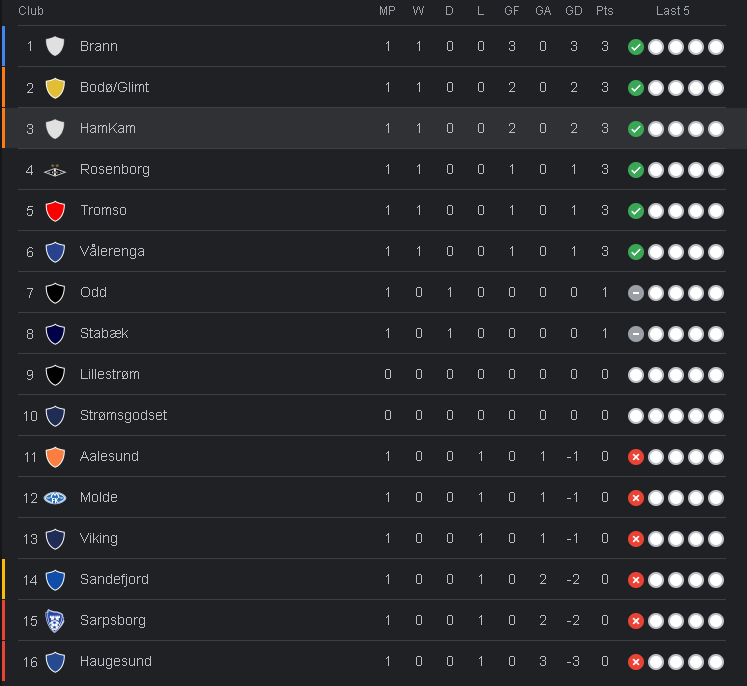
Here’s a look at the league table after the first week.
A great first week for our northernmost clubs, seeing Tromso, Bodo/Glimt, and Rosenborg all picking up wins, while Molde failing to make their many chances count was the biggest surprise of the week. The Eliteserien will start Matchweek 2 on Saturday, April 15 with Viking FK hosting Lillestrøm. Molde will have a tough test to try and avoid starting their season with back-to-back losses as they host Rosenborg.
Check in again soon for more updates from Norway, and other places around the footballing world!
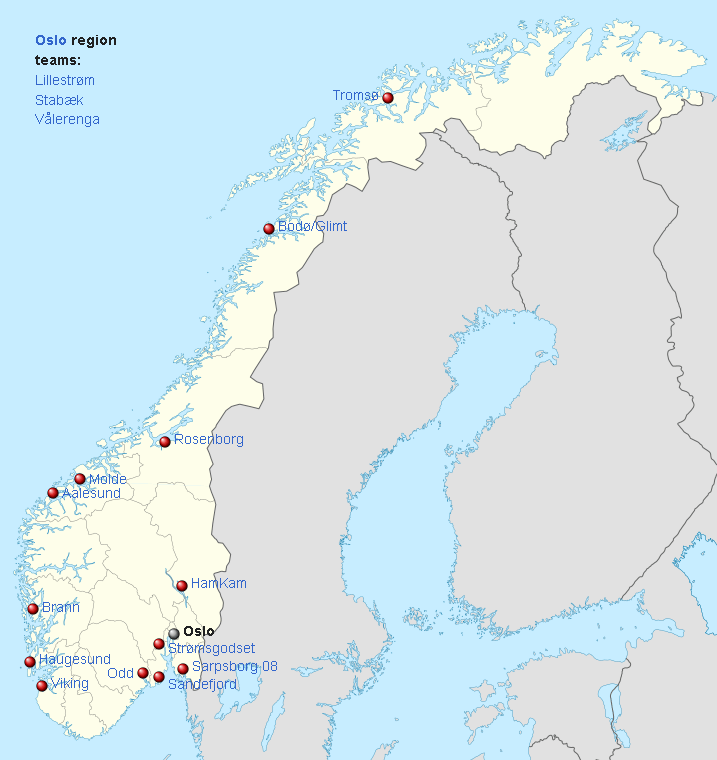
One of my favorite competitions in football begins in less than two weeks, Norway’s top flight, the Eliteserien. This is where one of my favorite teams, Bodø/Glimt, call home; which is why I have had the pleasure of watching this league for several seasons now. As many football fans do not know much about the Eliteserien, allow me to give you an introduction.
Eliteserien: The Beginning
Norway founded the “Norgesserien” (The League of Norway) in 1937, with the 1937-1938 season being its first, and Frederikstad winning the inaugural season. The format of the league was very different from the standard we see today, with clubs divided into eleven groups. The league would be decided through a knockout tournament or a final between the winners of the groups. The choice to separate teams into groups based on their regional district makes sense, and can be seen in early origins of many other national leagues. By the time of World War II, it had become a general consensus to merge the league into a single national competition, removing the regional group format. In 1948, the “Hovedserien” (The Main League), was created, formed by the 16 top clubs from the district leagues, who were split into two groups of 8, with group winners contesting a two-legged final for the league title. This formation remained until 1961, when the transition was made to a single group of 16 teams: the format we see today. The name of the league changed several times over the years before settling on “Eliteserien” in 2017.
For the 2023 Season, these are the teams competing in the Eliteserien, sorted by their finishing position in 2022. Note that Brann and Stabaek were promoted from the Norweigan First Division (the 2nd tier of Norweigan football):
Club
Position in 2022
Points in 2022
Molde FK
1st
78
FK Bodø/Glimt
2nd
60
Rosenborg BK
3rd
56
Lillestrøm SK
4th
53
Odd BK
5th
45
Vålerenga
6th
44
Tromsø IL
7th
43
Sarpsborg 08
8th
41
Aalesund FK
9th
39
FK Haugesund
10th
38
Viking FK
11th
35
Strømsgodset IF
12th
33
Hamerkameratene (HamKam)
13th
31
Sandefjord
14th
24
Brann
1st (First Div.)
81 (First Div.)
Stabaek
2nd (First Div.)
58 (First Div.)
Tiers of Teams:
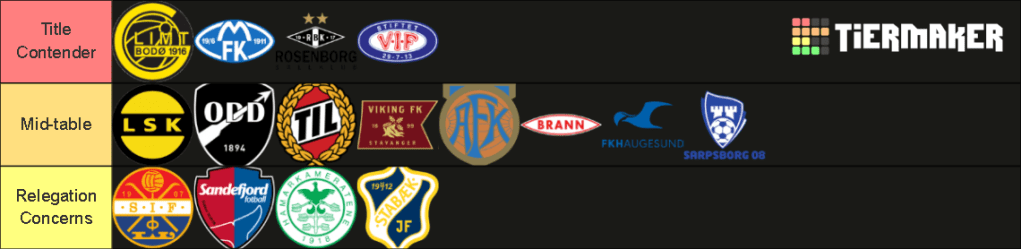
To use the English Premier League as an example, there are your top 6-type of clubs, your challengers for continental competition places, mid-table teams, and those that could be battling relegation. Since most of the readers will not have watched much Norwegian football, it is my hope that separating the teams into three tiers can help explain the power balances within Norwegian football.
Tier 1: Title Contenders
I have four clubs on my list with the potential to win the Eliteserien title this year if things go their way: Molde, Bodø/Glimt, Rosenborg, and Vålerenga.
While Vålerenga may seem like underdogs, I’ve really liked their transfer window and see them poised to improve a few places from their 6th place finish in 2022. Henrik Heggheim, an U21-capped Norwegian international centre-back was brought back from Sweden, as well as managing to sign a young Palmeiras U20 winger in Vitinha. This will be a energetic, exciting team that will be able to give any other title contenders here a fantastic match.
Molde and Bodø/Glimt have been the dominant force in Norwegian football for the past 4 years. Since 2019, Bodø/Glimt and Molde have each won the league with the other in 2nd, two times. Molde are coming into the season having sold their best striker, David Datro Fofana, to Chelsea for 12M euros. They’ve replaced Datro Fofana with Veton Berisha, a veteran Norwegian centre-forward with 10 caps for his country coming back to the Eliteserien after a year in Sweden. Berisha has most recently scored 38 goals in 56 appearances over his last two seasons in Norway, and shouldn’t need long to adapt back to the league. Aside from Berisha, Molde haven’t used the money Chelsea paid them to improve their squad, leaving me thinking that it will be unlikely that they repeat their 78 point total from 2022.
Bodø were more active in the transfer market, although it was due to necessity. Several starters the last time Bodø won the Eliteserien in 2021 moved on free transfers. Faris Pemi, the Cameroonian centre-forward, was purchased from relegated Kristiansund after managing 7 goal contributions in 14 games on a struggling side. The defensive line and midfield were also bolstered with several signings. The biggest question mark for Bodø will be at striker, regarding who will take the majority of minutes. The performance of the Bodø/Glimt centre-forward will directly decide the team’s title chances.
Last but not least, Rosenborg rounds out the title contenders. The most historically successful team in Norway football history, Rosenborg have won a record 26 Norwegian League titles with heavy dominance from the 1980’s to the early 2000’s. Most recently, they have been crowned champions 4 consecutive times between 2014 and 2018. Their squad changes include the sale of top goalscorer Casper Tengstedt to Benfica, who had 15 goals and 9 assists in 14 games last season. Rosenborg did not spend much of the 7M fee from Benfica, signing Canadian national team left winger Jayden Nelson from Toronto FC for 1M, and Norweigan Oscar Aga from the Allsvenskan for 500k. The lack of spending to replace such an integral part of the offence could be concerning, but Rosenborg has the quality in their squad to challenge for the top this season.
Tier 2: Mid-Table
In a 16-team league with 4 European spots up for grabs, if you aren’t a title contender or in a relegation battle, you’ll be mid-table. These are the teams that should not be worried about relegation, nor will they have dreams of the title. For me these teams are Lillestrøm, Odd, Tromsø, Viking, Aalesunds, Brann, Haugesund, and Sarpsborg. Of these teams Lillestrøm has the squad worth the most according to Transfermarkt.com, yet this is still less than half of the estimated value of the Bodø/Glimt and Molde squads. This is an example of a dropoff in power as we go down the league table. (Note: Vålerenga’s squad is estimated to be worth similar to Lillestrøm, even though I have them in Tier 1.) Teams like Tromsø and Aalesunds are working with much smaller budgets than most of the league, as regularly qualifying for UEFA competitions is the main reason Bodø/Glimt, Molde, and Rosenborg have higher financial power than the rest of the league. The highest points total from one of these mid-table teams should be around 50 points from 30 league games, while the mid-table teams closer to relegation will likely return 25-35 points over the season.
Tier 3: Relegation Concerns
In the Eliteserien, the bottom 2 teams are automatically relegated, and the team in 14th place (3rd last), plays against the team who finished 3rd in the second-tier for the final spot. Last season, Kristiansund and Jerv were automatically relegated with 23 and 20 points, respectively. Jerv lost 20 of their 30 matches. This season, I predict Strømsgodset, HamKam, Sandefjord, and newly promoted Stabaek to be fighting for 13th place and safety.
Stabaek has sold their top striker, Gift Orban, to Gent in Belgium, and have not replaced him with anyone nearly as inspiring. The signing of Danish CB Andreas Skovgaard from Brann is a pragmatic one which should help their cause. I don’t think the transfer activity has improved the team enough to survive in the Eliteserien, and I believe Stabaek are likely to go down again. This team finished 31 points behind Brann in the First Division last season and look to be fielding a similar roster to 2022.
HamKam and Sandefjord barely avoided relegation last season, with Sandefjord winning the relegation playoff, and HamKam finishing in 13th, 7 points clear of the relegation zone. HamKam’s transfer activity is not inspiring, adding 3 players from relegation-zone teams, with 2 signings from Vålerenga providing the most incoming quality. I have HamKam finishing 14th in the Relegation Playoff place, ahead of Sandefjord.
Sandefjord had a tough time last season, but managed to end it on a high(er) note, winning the relegation playoff and remaining in the Eliteserien. However, their challenge has not gotten any easier. Having the least valuable squad (according to Transfermarkt.com) in the league is not a competition one wants to win, and Sandefjord may well be looking for Brad Pitt to star in a “Moneyball” sequel in a few years’ time if they can stay in the top-flight with their limited budget. One team had to have the dishonor of being predicted to finish last, and for me, it is Sandefjord. I’m sorry :(.
Conclusion:
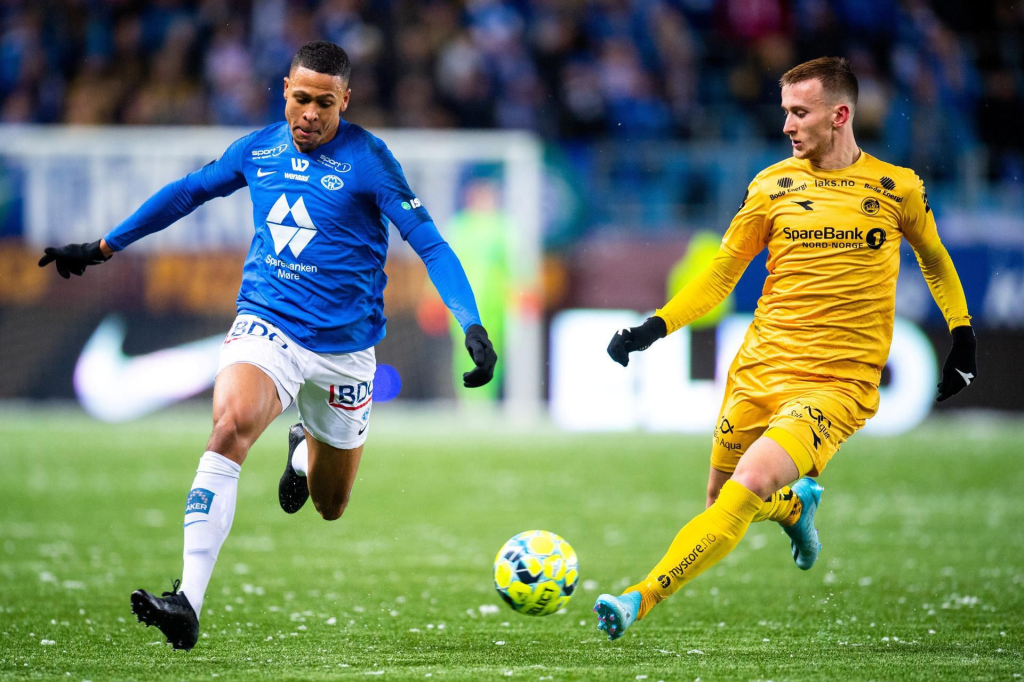
Photo Credit: BILDBYRÅN NORWAY
After one of their most successful seasons winning the domestic double, can Molde repeat as Norwegian champions? Or will the yellow shirts from the North put together a season truly worth remembering to win their 3rd title in 4 years? Perhaps Rosenborg find inspiration from their incredible historical success, or Vålerenga show the league that money isn’t everything. Regardless of the outcome, it will be a wonderful season full of excitement and suspense.
For anyone that’s made it this far, I truly appreciate you taking the time to read this story. If I can help just one person become more interested in Norwegian football, then it’s all worth it. This league will continue to produce prospects that flood Europe’s top clubs and warrants keeping an eye on it.





 futbird