While Burkina Faso may have seen their U17 World Cup hopes ended at the hands of Italy today, it takes nothing away from their impressive performance at this tournament and specifically the performance of Mohamed Zongo.
The attacking midfielder/winger, who will turn 16 years old in just a few days, had a standout performance for Burkina Faso at the U17 World Cup. With two goals and three assists, Zongo was a constant threat in the Burkinabe attack. Full of flair and with a magical left foot to complement it, Zongo can provide or score all the same. What stood out to me while watching is how deceptively powerful his ball striking is. On several occasions, it would look like Zongo was about to deliver a chipped cross, floated to the back post, only for an incredibly powerful shot to come off his boot instead. He showed the ability to put a good amount of curve on the ball, even at high-pace delivery. His goals against Czechia and Germany were a fantastic demonstration of ball-striking ability. For such a young player, Zongo has very impressive technical and physical ability.
Zongo is light on his feet and very agile on the ball, being a constant nightmare to opposing fullbacks in this tournament. His pace and acceleration were solid, not game breaking, but this is not something to judge him on at 15. He showed a good eye for identifying dangerous spaces to move into, and provided strong supporting runs for his teammates while in possession. Out of possession, Zongo looked to put in a high level of effort, and from what I could observe, seemed coachable and responsive to touchline instructions.
While mostly starting as a RW for the Burkina Faso U17 squad, Zongo clearly has the abilities to play more centrally as a #10, and often drifted inside onto his preferred left foot. As he still plays his club football in Burkina Faso, this U17 World Cup is the first I and many others have gotten to see of him, and I’m sure there will be several European clubs shortlisting him as one for the future. The right development path will likely be a significant part of his decision on where to sign, when that happens. At such a young age but having already shown very impressive ability, whichever club signs Zongo will have to be careful to bring him up the ranks at the right pace. He would still be eligible to play youth football for another 4/5 years, but it seems likely that he will make a senior debut sooner than that.
I wish Burkina Faso had advanced so I could have seen more of Mohamed Zongo, but he truly impressed and I see a lot of potential. With time on his side, just remember the name, as Mohamed Zongo is one to watch.
Hello everyone, here’s another excellent prospect recommendation from Patrick! Article Below:
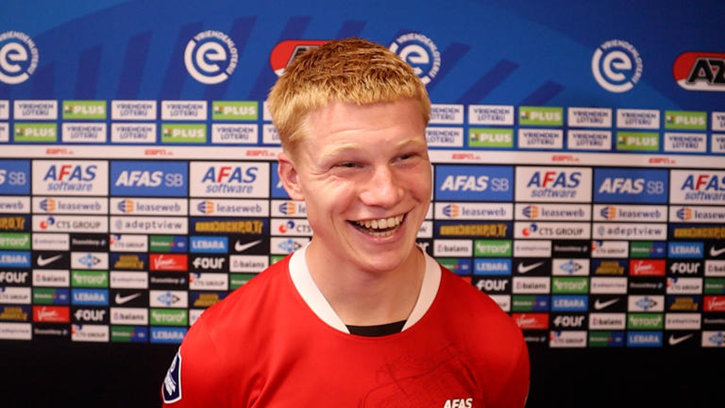
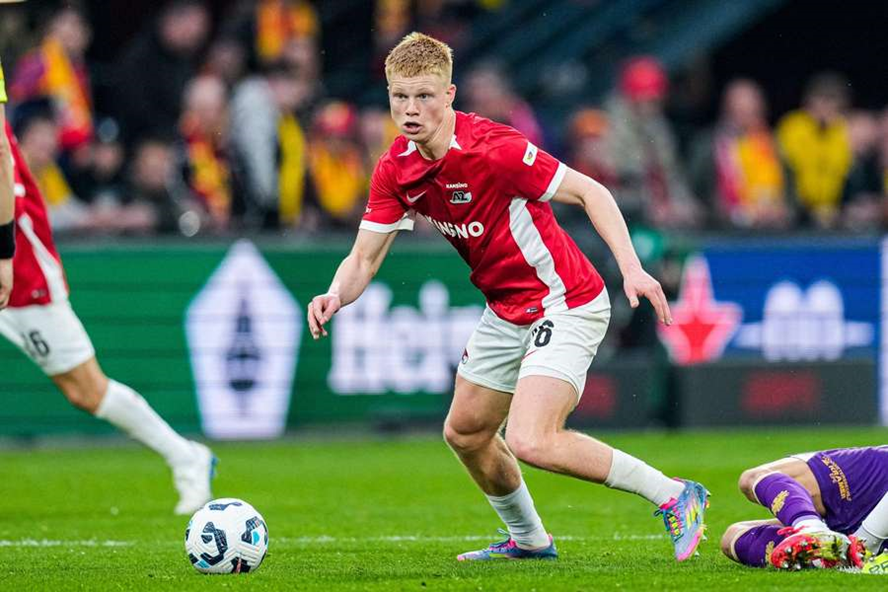
Kees Smit:
Age: 19 Height: 1.85 m (6′1″) Position: CM Club: AZ Alkmaar Team Shape: 4-3-3 or 4-2-3-1 Formation (Game Dependant) / 4-4-2 defensive shape
From the quiet Dutch town of Heiloo, a community of around 25,000 residents, Kees Smit has rapidly established himself as one of the Eredivisie’s brightest young midfielders. Born on January 20th, 2006, Smit joined AZ Alkmaar’s academy at nine years old and progressed through every age group before making his senior debut at 17.
Smit’s youth career was marked by standout performances in the 2022–23 UEFA Youth League, where he helped AZ defeat Barcelona and Real Madrid, culminating in a commanding 5–0 victory over Hajduk Split in the final. His calmness in possession, balance under pressure, and ability to control tempo were key traits throughout the tournament.
At the professional level, Smit made 4 appearances for Jong AZ during the 2022–23 season before truly breaking through the following year, where he registered 29 appearances and 2 goals. His progress accelerated in 2024–25, scoring 8 goals in just 13 matches for Jong AZ before being promoted permanently to the senior squad midway through the season — a decision made by the club due to his outstanding form and leadership within the U21 setup.
Smit had already made his Eredivisie debut for AZ’s first team in 2023–24, gradually earning more responsibility across domestic and European competitions. In that same 2024–25 campaign, he logged 20 Eredivisie appearances and 7 UEFA Europa League outings, contributing 1 goal and 1 assist while showcasing his growing maturity in midfield.
So far in the 2025–26 season, Smit has appeared in 7 Eredivisie matches and 6 UEFA Conference League fixtures, continuing to cement his place as one of AZ Alkmaar’s most exciting homegrown midfielders.
Professional Career (Jong AZ / AZ Alkmaar): • 2022–23 (Jong AZ): 4 appearances • 2023–24 (Jong AZ): 29 appearances, 2 goals • 2024–25 (Jong AZ): 13 appearances, 8 goals • 2023–24 (AZ First Team): Eredivisie – 4 appearances | UEFA Europa League – 1 appearance • 2024–25 (AZ First Team): Eredivisie – 20 appearances, 1 goal, 1 assist | UEFA Europa League – 7 appearances • 2025–26 (AZ First Team): Eredivisie – 7 appearances | UEFA Conference League – 6 appearances (13 total)
International Play
Internationally, Smit has represented the Netherlands across multiple age groups:
(2021–2022) U16: 6 appearances
(2022–2023) U17: 7 appearances
(2023) U18: 3 appearances
(2024–2025) U19: 16 appearances, 4 goals
(2025–present) U21: 1 appearance
Notably, during the 2025 UEFA European Under-19 Championship, Smit captained the Netherlands to victory, scoring 4 goals and providing 1 assist across 5 appearances, including a decisive performance in the 1–0 final win over Spain, earning the Player of the Tournament honor.
I was fortunate enough to attend AZ Alkmaar’s match against PEC Zwolle on September 24th at AFAS Stadion. Let me tell you — Smit did not disappoint. In the 2–2 draw, he showcased a composed long-range finish, effortless dribbling, and relentless pressing. Alongside standouts Pinto, Daal, and Mijnans, he was crucial in AZ’s midfield that day, reinforcing exactly why he is regarded as one of the most promising midfielders in Dutch football today.
Technical Attributes
Smit has the kind of press-resistance you expect from a modern central midfielder. His first touch and ball control are clean, allowing him to receive on the half-turn and roll out of tight areas. Smit can dictate tempo in midfield – his short passing is crisp and accurate, and he is very comfortable playing one-two’s in buildup. From deeper zones he’s capable of punching forward balls into attackers, while also striking longer diagonals to switch play and stretch opposition blocks.
On the dribble, Kees Smith is agile and has a quick first 2-3 steps, using shoulder drops and body feints to beat pressure in 1v1 midfield duels. He averages over a successful take-on per 90, making him a useful carrier to advance possession. Additionally, crossing and set-piece delivery are part of his arsenal. He’s a regular on corners and wide free kicks, delivering out swinging balls with pace and shape.
Defensively, his anticipation stands out. He steps into passing lanes with good timing and shows sharp recognition of when to press. Recovery runs and covering positions are consistent, and he’s effective at blocking angles and narrowing spaces in AZ’s compact 4-4-2 block. Showing visible improvement this season, Smit is competent in tackles, but not elite at this stage. He is helped by the structure around him and the guidance of Jordy Clasie, who often provides cover and balance. The trend suggests he’s developing into a more reliable defensive presence with time.
Mental Attributes
What elevates Smit is his maturity. He scans constantly, finding space between lines and opening up options for teammates. His game management is impressive for 19 years old. Smit knows when to recycle possession, when to drive forward, and when to take risks. His support play is intelligent, offering himself as a safe outlet while still progressing attacks.
Smit’s vision and creativity come through in how he links play and identifies runners. He regularly releases overlapping fullbacks or threads passes into the final third. Off the ball, his positioning in half-spaces gives AZ structure both in attack and when transitioning into defense.
His leadership is a defining trait. Captaining the Netherlands U19s to a European Championship showed not just composure under pressure but also a vocal presence that lifts teammates. His communication in pressing sequences helps maintain compactness, while his overall attitude reflects a motivated, team-first mentality.
Physical Attributes
Smit is still developing his frame but already shows durability, having handled the transition from Jong AZ to first-team football without drop-off. His stamina base is excellent, sustaining pressing intensity across 90 minutes. His mobility is strong — agile enough to spin out of pressure and maintain balance when carrying the ball.
He’s not a physically dominant midfielder yet, but his sharpness in tight spaces compensates for that. Smit’s speed over longer distances are improving, though his anticipation and positioning often make up the difference.
Statistical Snapshot (FBREF Data)
Attacking Output:
Kees Smit npxG + xAG (per 90): 0.41
AZ Alkmaar Team Rate (per 90): 3.10
Contribution: 14.3% of team’s attacking output
Progressive Passing:
Kees Smit Progressive Passes (per 90): 5.83
Team Progressive Passes (per 90): 47.1
Contribution: 12.37% of team total
Progressive Carrying:
Kees Smit Progressive Carries (per 90): 1.98
Team Progressive Carries (per 90): 22.1
Contribution: 11.16% of team total
Take-Ons:
Kees Smit Successful Take-Ons (per 90): 1.20
Team Successful Take-Ons (per 90): 8.88
Contribution: 22.29% of team total
Touches:
Kees Smit Touches (per 90): 60.8
Team Touches (per 90): 630.8
Contribution: 9.63% of team total
Passing:
Kees Smit Passes (per 90): 43.0
Team Passes (per 90): 421.9
Contribution: 10.19% of team total
He has already chipped in 1 goal and 2 assists, accounting for 11.5% of AZ’s total G+A and an impressive 30% of their total assists at just 19 years old.
Projection
Smit has the profile of a complete midfielder: technically secure, mentally mature, and with the transitional instincts that modern top-level football demands. New-age midfielders are expected to adapt across all three central roles, and Smit has shown he can operate as a 6, 8, or 10 depending on the system.
The data, however, makes his optimal role clear. As a central midfielder he posts stronger outputs in progressive passes, carries, and take-ons highlighting his influence in build-up and transitional phases. As an attacking midfielder, his pass volume and completion improve slightly, but his ability to progress play and contribute defensively diminishes. The difference underscores that his best work comes from deeper, where he can dictate tempo, launch attacks, and offer defensive support. With his mix of technical ability, tactical awareness, and growing physicality, Smit embodies the modern midfielder. He can dictate play from deep or drive forward when needed — a true talent worth tracking.
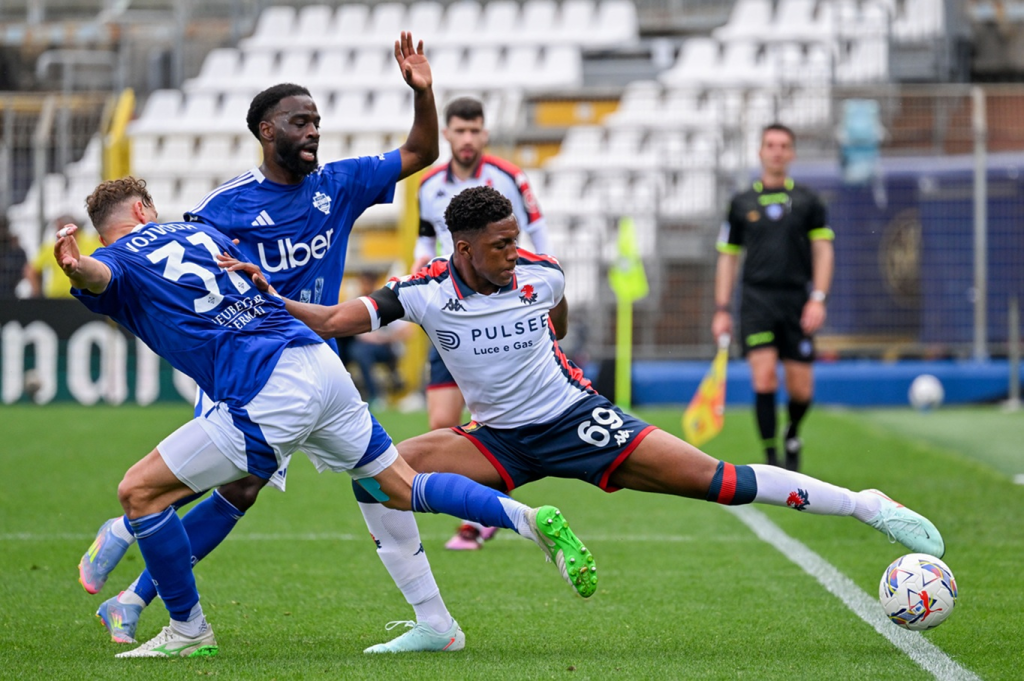
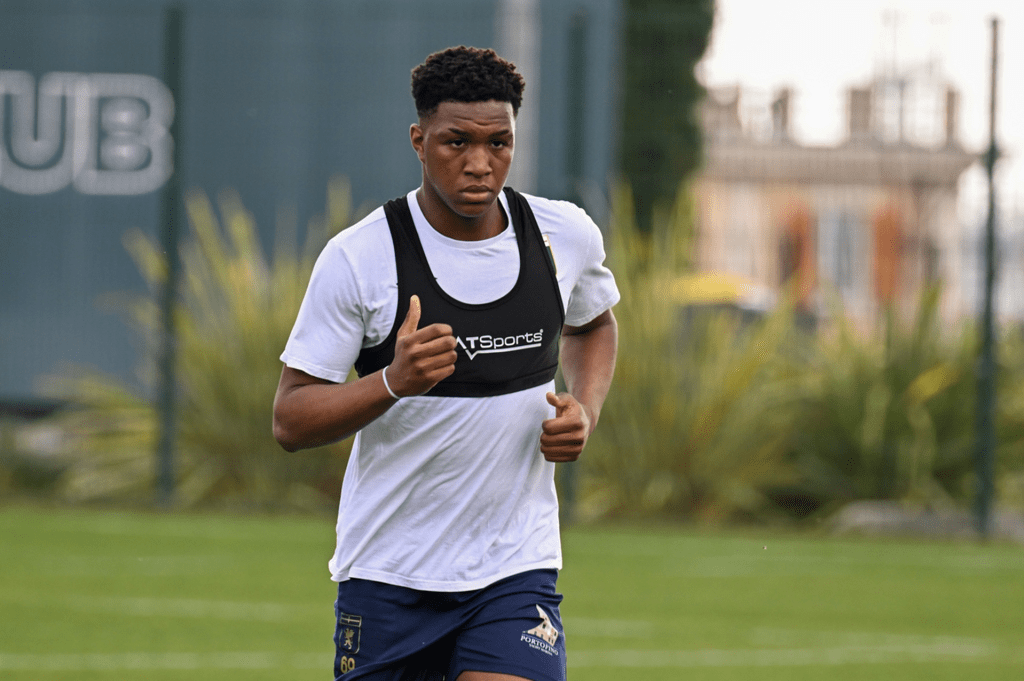
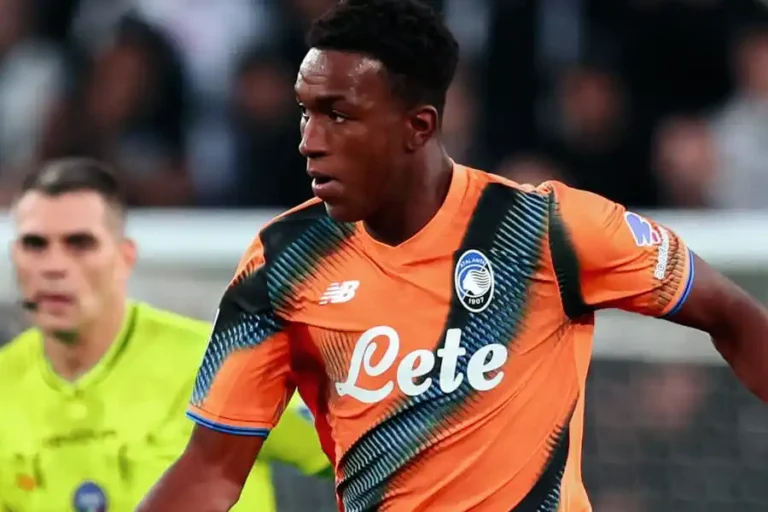
Born in 2008 (yes, I feel old too) about 25km north of Napoli in the city of Aversa, Italy, Honest Ahanor is now making his name known. Growing up with Italian legend Paolo Maldini as his footballing idol, Ahanor joined the Genoa youth ranks with that in mind, as he began to develop as a CB. During the 2024/25 season, Ahanor started with the Genoa U15’s, then moved to the U16’s, and promptly again to the U17’s. This same year, at 15 years old, he was called up to play for Genoa’s U19 team, and the following year was immediately promoted to the U20’s. Just three matches at that level in the 24/25 season, and Genoa had seen enough, bringing Ahanor up to the senior team. This rise from U15 football to Serie A in less than 2 seasons was truly remarkable, and since then Ahanor has been showing why he deserved it. After playing in 6 matches for Genoa in the 24/25 season, Atalanta shelled out 20M euros for the defender, the second highest transfer fee of all time for an Italian U17 player. Clearly they saw his potential, and he has repaid their faith so far, performing even better in his first matches with Atalanta than he did at Genoa.
Player Overview:
A true ball playing CB, Honest Ahanor stands out most in possession. He loves to bring the ball out of defence himself, and will frequently use his long frame to skip past defenders in just a few steps. Ahanor does have the early makings of a rare type of defender, one who can very comfortably operate as both a CB, and as a LWB. Think Atlético’s Dávid Hancko, just trade off some of Hancko’s defending/crossing ability for a bit more on the ball skill.
Physical:
Standing at 184cm tall, Honest Ahanor has a relatively slender, but strong build. At just 17 years old, he is nowhere near his physical peak yet, and will almost certainly develop considerably in this area. However, his light and agile frame allows him to move with the ball unlike most defenders, showing strong pace and a quick change of direction. While not aerially dominant just yet, Ahanor has shown a very respectable level of duels as a teenager playing against grown men – winning 14/20 of his Serie A duels and 3/4 of his aerial duels so far.
Mental/Tactical:
While I can’t say I know Honest Ahanor, the human being, we can infer something about his mentality from his rapid rise to the top of Italian football. Every time he has been given an opportunity, he has made the most of it. With Atalanta, Ahanor has played in both Champions League matches so far, albeit just 5 minutes vs PSG. In his full match against Club Brugge, Ahanor was one of Atalanta’s standout players while being one of their least experienced, showing his ability to rise to the occasion. Tactically, as I mentioned before, I believe Ahanor could operate as a LCB/LB in a back 4 system, or as a CB/LWB in a back 5 system. He really enjoys making forward runs, both inverted and overlapping, though in Atalanta’s current system he is asked to make inverted runs more often while playing as the LCB. Ahanor’s off the ball movement is also very impressive, not just often seen. In the match against Brugge, several times Ahanor broke the first (and sometimes second) lines of press by himself, before laying the ball off and continuing his run into the box, adding an extra dimension to the Atalanta attack for defenders to consider. Defensively, his positioning looks quite sound for such a young defender, frequently intercepting and recovering the ball for his side. At times he has to use his long frame to stretch for a block or tackle, and could work more on being in position to not need to make a tackle, like his idol Maldini. Overall, Ahanor looks like a tactically versatile player who can play in multiple roles across a defence.
Technical:
When Ahanor is on the ball, he looks special. Very comfortable with the ball at his feet, Ahanor is a very accurate passer, recording an 86% pass completion rate in Serie A, and in his full UCL debut completing 58/59 passes. Ahanor does like to try a few long balls per game, which does make his pass completion rating more impressive. Ahanor has yet to be dispossessed while in possession this season, which absolutely lines up with the eye test on him. Almost as if he wants to be pressured, Ahanor will draw defenders in very close, before darting around them before they can react. This made buildup for Atalanta relatively easy both against Juventus and Club Brugge, as any time play was switched over to the left side, Ahanor had more than enough space to take the ball into the middle or final third by himself, and had the ability to do so. If you’re an admirer of Total Football, or love seeing a defender attack, then Honest Ahanor is the defender for you.
Summary:
A very exciting Italian defender, Honest Ahanor can comfortably play anywhere from LWB to a central CB, but would be best in a back 5 system. Incredibly gifted on the ball, he is a one-man press destroying machine, frequently bringing the ball out of defence by himself, and then appearing in the final third in central positions you wouldn’t expect a CB to be in. The amount of chaos that he causes to defensive structures is quite unique. With the right development, Ahanor has potential to be an Italian senior national team player at the bare minimum. With a closest player comparison to Dávid Hancko, it is no coincidence that I believe Atlético de Madrid would be a top destination for Ahanor to reach his full potential at. He already has the makings of a top-level ball playing CB, and the defensive development he would receive under Simeone would round out his skillset in a way that could allow him to become a real star. Everton could be another decent option as a LB, looking at their usage of Mykolenko over the past few seasons. Regardless of where he ends up, Honest Ahanor is an extremely promising prospect with the potential to become a world-class “Swiss army knife” type defender: slot him in anywhere in defence and he’ll do a job.
In modern football, scouting and recruitment processes can vary considerably from club to club. This can depend on various things, one obvious one being finances. A club in the 5th tier of England cannot afford the same recruitment department size as a club like Manchester City, and might have to resort to more “old-fashioned” methods of scouting. Some clubs, like Brentford, have actually purchased football statistics companies and use them in house to find potential signings through various metrics. So when talking about how a club approaches recruitment, I would like to speak more generally and not as specific to a certain type of club budget, so it applies to all clubs.
There are so many variables involved with player recruitment that it can be easy for a club to start off going down the wrong path and not realizing until they’ve committed to the players they identified. This is what I think a cohesive scouting procedure could look like.
Step 1: Clear Team Identity
The first step in successful recruitment should be having a very clear team identity. This involves having a clear style of play, generally coming from the manager, where different roles within the team system can be identified and specifically targeted. Some team systems are easier to recruit for than others, by having more similar player roles in the system. For example, to come up with an oversimplified tactic, a team could play a 4-4-2 where the fullbacks and wingers on each side have the same role within the system, and the two CB’s, two CM’s, and two ST’s also have the same role as their partner. So while there are still 11 places in the team to recruit for, there are only 5 roles within the system (excluding goalkeeper). Obviously most tactical systems are more complicated than that, and as a result it is even more important that the roles of each player in the system are clearly identified. The role of the player is different from the player’s position. Recruiting just based on position will lead to rolling the dice on every signing, as say, a right-back, can have several different sets of responsibilities in the team depending on the system. Once the roles required for the system are identified clearly, then the key metrics to look at for each role can be assessed.
Step 2: Prerequisites
For the scouting process to be efficient, the next step after establishing the team identity and system is to identify what attributes are required as a bare minimum to play for your club. This can be several things, one common example is player mentality. Different clubs might want different specific aspects to a players mentality, but in general most clubs are looking for a determined player who is motivated to improve, and has a good work rate. To use my club, Bodø/Glimt, as an example, their prerequisites are almost entirely mental. Kjetil Knutsen operates with a philosophy of focusing on daily improvements without a specific target or end goal, and is infamous for having very difficult training sessions. As a result, Knutsen cares a lot about how a player is performing in training at their current club, and how they performed in training at past clubs, which involves speaking with former coaches of the player. Since the Glimt training sessions are so demanding, Knutsen knows that if a player didn’t bring enough energy and work rate to training at their former club, there’s no way they will meet his training standards at Bodø/Glimt.
So depending on what your team identity is, your prerequisites will be different. It can be physical metrics (distance covered per game, sprints per game, etc.), technical ability (defenders need to be competent in building out from the back, players must be press-resistant, wingers need to have strong cross completion %, etc.), mental attributes (as discussed above), or any combination of the three. What’s important is identifying what attributes your team system needs the most (this can be role-specific prerequisites), so that any player who doesn’t meet the prerequisites can be quickly filtered out of the scope, and less time is wasted on players who likely won’t be a good fit for the team.
Step 3: Establish Scouting Metrics
This step is where the club needs to decide how they will go about identifying potential signings. Will the approach be more analytics-based, allowing more players to be identified in shorter periods of time, or more based on the “eye test”, which can offer a more complete view of a player at the cost of time? I personally think that if the club budget allows for analytics based scouting, the most efficient method is to use an analytics-based approach to filter out players who will not fit the team, before identifying a decent-sized list of players who could be good fits based on their play. Then, you send your scouts to go watch the individual players identified by the analytical step, to see if the eye test matches the numbers. Statistics can be very useful, but they never tell the whole story. A player might have incredible chance creation statistics, but if you never watch the player in a match, you might not notice that the team system they play in is set up to give this player the chance to make the final pass more often than any teammates. This might not be an issue for your club if you plan on using the player in a similar dominant role within your system, but if the role you are recruiting this player for doesn’t have the same share of the ball in the final third, then this player will likely not have as impressive numbers playing in your system. Similarly, a player with apparent poor statistics might be playing in a role that doesn’t suit them, or allow them to maximize their strengths. This is another reason why the specific metrics you wish to scout for are important to identify correctly, so potentially undervalued players are not ignored.
Just to give another example of what this might look like for a certain role, lets use a winger who plays as an inside forward. In this role, you generally want this player to be strong on the foot opposite to the side of the pitch they are on (a strong left-footed right winger, or vice versa). They need to be competent at getting past a full-back while cutting inside, have the ability to play a through ball from a central area or make a good run into the box. So to start, I would look at a map of where the player’s touches on the pitch, passes received, and passes made are located. Just looking at this can give you a very good idea of the types of positions this player generally finds themselves on the ball. Remember that this will be impacted by the team system they currently play in, a player could have all the attributes needed to be an inside forward, but is forced to play as a traditional winger in their current system.
Next, I would look at the player’s on the ball play. Not just # of passes attempted and completion rate, but the type of passes attempted. For an inside forward, we want this player to be attempting progressive forward passes and creating xA. When they receive the ball, do they look for an incisive pass, or more often just recycle possession? Does this player try to take on their man, and if so, how often are they successful? Does this player often lose the ball in possession?
After these two steps, you would have a shortlist of players who commonly take up the positions you want them to, have your preferred tendency to attempt dribbles, and are looking for the types of passes that your system requires from them. Since it is unlikely that a club can sign a “perfect player”, the attributes required for the most essential part of the role must be prioritized, with other attributes used to differentiate between multiple players who meet all prerequisites. It is always important to keep in mind during every step of the recruitment process what the specific player role you are recruiting for is, and what the most essential attributes to perform this role are. I also think that it is important to focus more on performance related metrics (xG/xA, types of runs made, types of passes attempted) than outcome related metrics (goals, assists). The outcome of the plays that a player makes are dependent on many variables which might not be relevant to your team. If a player is consistently creating good chances for their teammates, but the chances are not converted, you will miss out on a potentially impactful player if you only look at their assists numbers.
Step 4: Find Potential Players/Use Your Eyes
Once the recruitment team has established the team identity, the necessary prerequisite attributes for each role, and their prioritization of different metrics when scouting, a shortlist of players for the desired role can be developed. Here is where the more old fashioned scouting methods come back into play. Based on the shortlist developed using the priority of required metrics, scouts should be assigned to watch matches of the players on the shortlist. No player should be signed just based off analytics and watching them play, though. If possible, sending scouts to the matches in person could give them a chance to meet the player and start getting a sense for the human being that’s behind the “footballer”, which is a step that cannot be skipped in good conscience. A football team is like a family, and you need to assess how a potential signing might fit into your family and get along with others. If possible, watching a potential player in training is very helpful to evaluate how they might perform in your team’s training sessions. Now this step is implemented in every football club that scouts players, watching players is the most basic form of scouting. However, like I mentioned, a lot of precious time can be wasted if the proper players to go watch aren’t identified beforehand. This is why Steps 1-3 are so important if Step 4 is to be successful.
To summarize, at a bare minimum, football scouting must be more thought out than simply looking for a player that plays a certain position. In modern football, the players “position” (ST, CB, etc.) tells you very little about what that player is asked to do in a match. This is why the roles of the system must be clearly identified, knowing what each player is being asked to do in a match, so that the requirements to play that role can be identified. To avoid wasting time, clubs must set certain prerequisite standards in chosen metrics, that any potential signing must meet. Role-specific prerequisites are equally important. Once potential signings are filtered by the chosen prerequisites, then it is time to start watching these players live, to put their metrics/statistics in context with their team system and the league they play in. The club needs to know what kind of player they are scouting, not just the quantifiable statistics of what the player produced. Finally, a club must feel that they have a good sense of the person they are signing, and that their mentality/personality fits in with the rest of the team. If all of these boxes are checked before a signing is completed, then the likelihood of the signing being successful for the club will be much higher than otherwise.
For any questions or communication, feel free to email me at scouting.futbird@gmail.com



 futbird