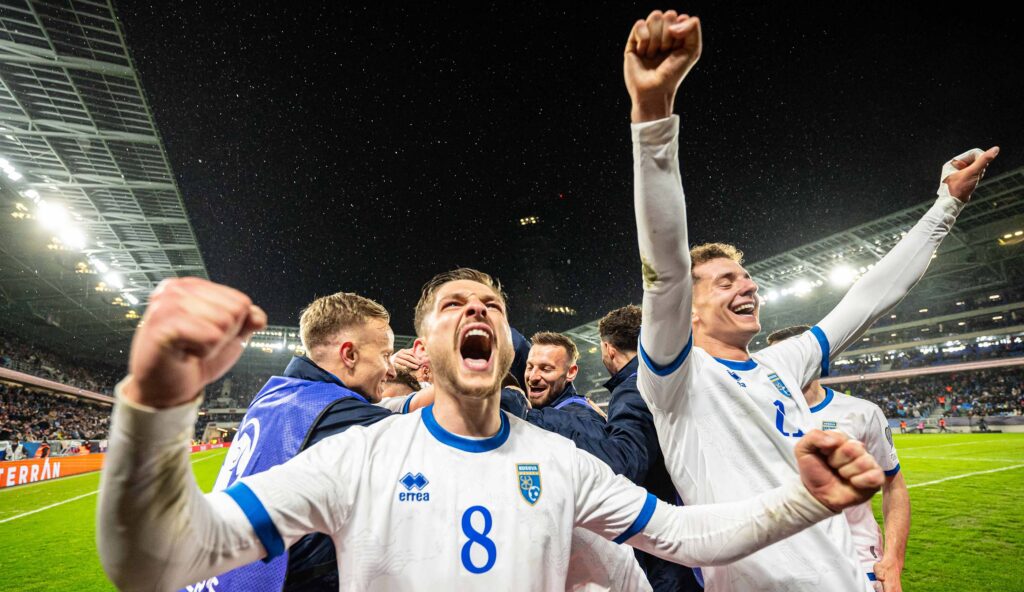
In the UEFA World Cup Playoff Semifinal, Slovakia lost 4-3 to Kosovo, ending their 2026 World Cup hopes. The result is surprising, and the combination of many things coming together in the wrong way for the home crowd in Bratislava. First, manager Francesco Calzona, after having repeatedly worked miracles with his 4-3-3 system, switched to a 5-back system to start this match for the first time in years. This was a confusing decision. Huge match at home as the slight favourites, and Slovakia were set up in their most defensive system I have seen under Calzona, a 5-2-3 that fell into a 5-4-1 out of possession. This allowed Kosovo to get more possession than expected in this match and really feel like they had the opportunity to create. After Martin Valjent opened the scoring for Slovakia in the 6th minute, they sat back and let Kosovo have the ball. In the first half, Kosovo held the majority of possession, yet were down 2-1 thanks to a Haraslin direct free kick goal.
The loss of Leo Sauer early in the first half was undeniably a huge blow to the Slovak offence. The recent 3-time Slovak Young Player of the Year winner is one of the most talented players on the team despite being just 20 years old and Slovakia struggled to create after he left the match.
Kosovo scored in the 47′, again in the 60′, and again in the 72′ to go up 4-2 and effectively end all hopes of a Slovak victory. A David Strelec goal one minute before full-time was but mere consolation, as the hosts were knocked out of WC contention. This also could have been the last match played in a Slovak kit for Martin Dubravka, which could leave some huge shoes to fill. Marek Rodak has 25 caps to his name as the most experienced replacement for Dubravka in net, while Dominik Takac is 27 without an official cap for the senior team yet. Other options might include L’ubomir Belko, who recently moved to Viking FK in Norway from Žilina, or his successor in northern Slovakia, Jakub Badzgon. The point is, there’s a huge experience void that will be present when Dubravka retires from the national team and we cannot expect Slovakia to maintain a similar level to the past 10 years in net.
Stanislav Lobotka will be 33 by the next Euro and 35 by the next World Cup. Perhaps the most important player in the Slovak team, Lobotka is the midfield conductor and heart of the Slovak possession play. Ondrej Duda, regular set piece taker and midfield colleague of Lobotka, is the same age. The two have 163 caps combined. Peter Pekarik has 132 on his own, and has already been playing long past when he should’ve been allowed to rest due to a lack of depth at RB. The time is probably now to start giving the next generation the experience they’ll need to qualify for the next Euro tournament. Tomas Rigo and Mario Sauer are both really positive players in midfield and should becoming much more prominent in the squad.
As for Calzona, does he stay for at least another 2 years through the next Euro cycle? I honestly couldn’t say. If he does decide to step down, there would be a massive appointment to be made by the Slovak FA, crucial to the next generation of the Slovak national team developing. If all goes well, Slovakia should have a good chance of qualifying for Euro 2032 and WC 2034. As for the near future, Nations League C awaits. Improving their Nations League standing is important, as we saw this year in the WC qualifiers, with teams being guaranteed WC playoff places for performing well enough in the Nations League. A season in Nations League C could be good for the opportunity to develop younger players.
Overall, this loss to Kosovo was a missed opportunity: a chance to qualify for the first World Cup since 2010, with the last overlap of two generations of national team players. By the next cycle, the older generation will likely not be regular starters, and the Slovak team will have some growing to do before they might reach the heights we saw at Euro 2024. Ďakujem za prečítanie 🙂
-LM
 futbird