
Good Morning/Afternoon/Evening to all, wherever you are reading this from! I’m going to be looking at the upcoming Spain v. Austria R32 match being played out of Los Angeles, California. The winner of the Portugal/Croatia match will meet either Spain or Austria in the Round of 16.
How They Got Here:
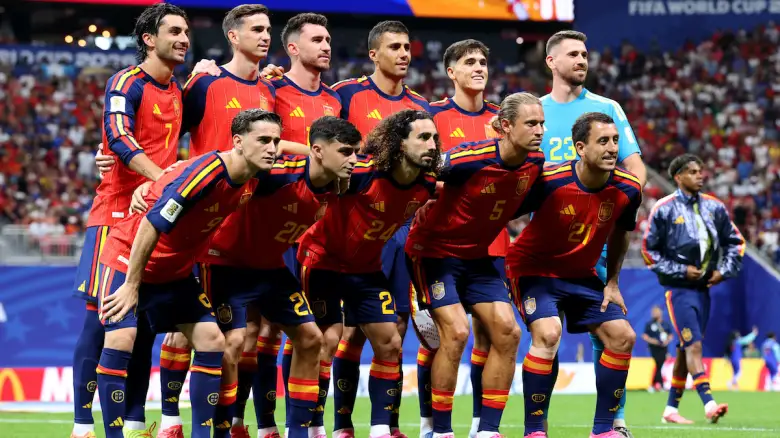
Spain breezed through World Cup qualification (as expected), in a group with Turkiye, Georgia, and Bulgaria. Aside from one draw with Turkiye on the final matchday after the group had already been won, Spain obtained max points from all of their matches, strolling into a World Cup group alongside Cabo Verde, Uruguay, and Saudi Arabia. As the favourite to top this group, Spain would look to exert themselves on their opponents in the group stage. Their tournament did not get started as planned though, failing to put a ball past Vozinha in the Cabo Verde net over 90 minutes of offensive pressure. Spain attempted 27 shots (for a total of 2.1xG), put 7 on target, but the 40-year old Cabo Verdean keeper was up to the task. Luis de la Fuente started with Lamine Yamal on the bench: Ferran Torres and Gavi flanked Mikel Oryazabal in a front 3 without a ST, while PSG man Fabian Ruiz joined Rodri and Pedri in midfield. This result would not do, and so in Spain’s next match needing a win against Saudi Arabia, Ferran, Gavi, and Ruiz were swapped out for Yamal, Alex Baena, and Dani Olmo, respectively. Apparently having your star player on the pitch is helpful, as Lamine Yamal scored 10 minutes into the match and Spain never looked back. Mikel Oryazabal, Spain’s hero of Euro ’24, added a brace, while an own goal gave Spain a 4-0 victory and all 3 points. Just a draw against Uruguay in the final match would be enough, and we saw Luis de la Fuente start Mikel Merino in place of Dani Olmo, a much more defensive-minded change. Uruguay did not threaten much at this tournament in general, and once Baena put Spain up 1-0 off a Fernando Muslera error in goal, the result seemed settled. Uruguay would manage one shot on target in the 2nd half and bow out of the tournament unceremoniously. Spain topped the group that they were always expected to, and booked their place in Los Angeles for the R32.
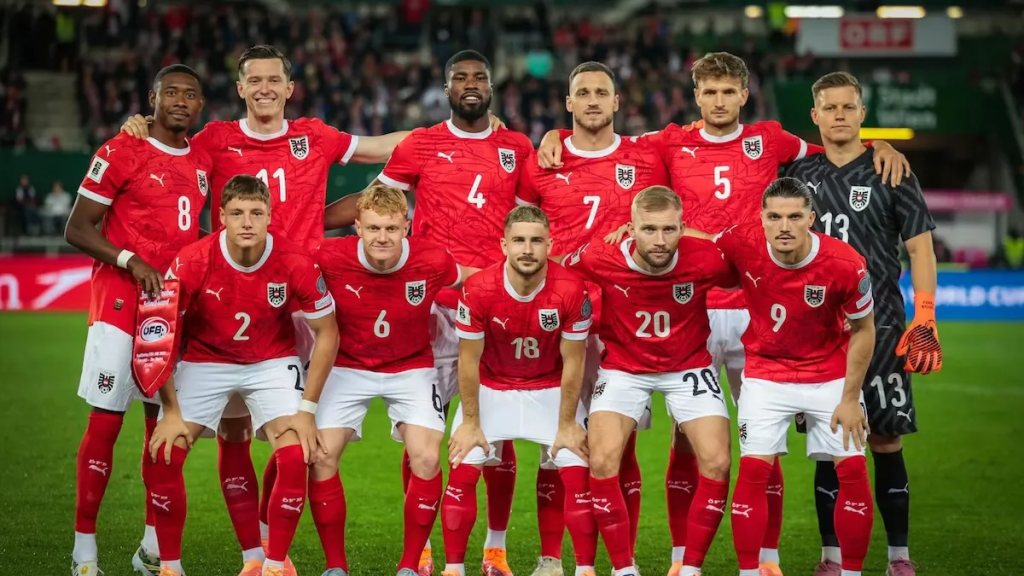
Austria had a more difficult UEFA qualification group, alongside Romania and Bosnia and Herzegovina. The Bosnians were the biggest test for Austria, who handled them well with a win and a draw to top their qualification group. Their World Cup group consisted of Argentina, Algeria, and Jordan. Austria is currently the #24 ranked nation in the world, and were not considerable favourites to qualify ahead of Algeria (#28). Austria’s tournament began against Jordan, their lowest-ranked group opponent. While Jordan created some chances and managed to score a goal, Austria was always in control of this match and ran out 3-1 winners. They would face the reigning holders Argentina on MD2, and frankly were given a reality check. Austria failed to convert the spells of possession they had into scoring chances, and so were punished with a Messi brace that could’ve been a hat-trick if not for a missed penalty. Ralf Ragnick made two changes from his starting XI v. Jordan, bringing in young Paul Wanner to play as the #10, and Michael Gregoritsch at CF. Both players did struggle to have an impact against Argentina, along with Xaver Schlager, who was overrun in midfield. Going into the final matchday, Austria needed a draw or better against Algeria to ensure qualification. This was a weird match, with the winner of the match knowing that their reward would be Spain in the R32, while the loser of this match would go to Vancouver to play Switzerland in the R32. There was legitimate incentive for Austria to lose this game and avoid Spain in the R32, although trying to lose in order to get a “favourable” draw has never really worked out for a team in the past. Algeria dominated possession in this match, knowing they needed to win and holding 65% of the ball over the 90 minutes. Ragnick went for his most defensive lineup yet, playing a “fake” 4-2-3-1 that deployed defensive midfielders as the wingers in Sabitzer and Laimer. While capable playmakers, neither player is a winger, and this formation looked primed to drop into a 4-4-2 block and try to avoid losing. This game was back-and-forth, with Austria opening the scoring through Arnautovic in the 28′, and adding a second from Sabitzer in the 55′, getting pegged back by Algeria on both occasions before a 93′ goal from Riyad Mahrez looked to send Algeria on their way to 3 points and a date with Spain. Late substitute Sasa Kalajdzic equalised for Australia in the 90+6′, which gave them 2nd place in their group and this matchup against Spain.
What To Expect:
While starting lineups are not confirmed yet, we have seen the various team selections of Luis de la Fuente for different match-states, and will be able to tell what approach he is taking today with his starting XI. I expect a front 3 of Baena, Oryazabal, and Lamine, which looks to be de la Fuente’s first-choice by now after the unfortunate injury to the brilliant Nico Williams who would certainly start at LW. In midfield, Rodri and Pedri are near locks to start, with the question being who will join them? Option A: Fabian Ruiz, Option B: Dani Olmo, or Option C: Mikel Merino. (Gavi and Martin Zubimendi are available for selection, but I do not expect them to start in midfield today). The backline has been unchanged at this tournament, so it is relatively safe to expect a back-4 of Cucurella, Laporte, Cubarsi, and Llorente in front of Unai Simon in net. Expect Marc Cucurella at LB to constantly get forward in possession and leave significant space behind him that can be exploited in transition. If Austria are smart, they will not press Aymeric Laporte in the backline and only apply pressure to Pau Cubarsi. Laporte is very likely to turn the ball over by himself if left in space and is the worst of the Spanish backline at build-up. Marcos Llorente at RB will get forward, but have a much more defensive role than Cucurella. He has the engine to run up and down the flank all match and is a valuable player for Spain. The Spaniards will look to control possession and the match, without playing too high-tempo or directly. The midfield trio are favoured to retain possession against Austria’s press, and they will be looking to feed passes to Baena and Yamal on the wings often. In attack is really where Spain have the most potential to be stopped. They are not playing with a true #9 and have no real attacking focal point for crosses and balls into the box (however, playing sans-striker wasn’t an issue from 2008-2012 when Spain won 3 straight major tournaments doing so). Much of Spain’s final third chance creation comes down to individual players winning their 1v1 matchups and drawing in defenders before finding a teammate. The ball will go through Lamine Yamal, a LOT. Spain will try to manipulate the Austrian defensive structure with short passing and interplay, waiting for the ideal passing lanes to open.
Austria on the other hand, know that they will be without the ball for much of this match, and that they will need to pick their moments to press well or risk exposing their backline when pressing high. This 4-2-3-1 with DM’s as wingers could be effective against Spain! In theory, Austria would have Sabitzer (at LW) tracking back to double-team Yamal alongside captain David Alaba (at LB), with a much greater capacity to contribute defensively than a true winger would. Alaba will have the undesirable task of being Lamine Yamal’s primary marker today. If he’s beaten, then considerable pressure can fall to the Austrian CB pairing of Kevin Danso and Philipp Lienhart to leave their positions and press. The decision-making of the Austrian defence in who to mark and when will be very important to their chances of success today. Filling out the backline in front of Alexander Schlager in net, is Como’s Stefan Posch. Posch will likely be Austria’s only forward-thinking FB today, and he has the ability to create big chances for his attackers and contribute with goals himself.
Xaver Schlager and Niclas Seiwald form the double-pivot in midfield. The Leipzig duo has existing chemistry in midfield together and have been solid for Austria at this tournament. Schlager is a little more defensive-minded, while Seiwald is more of a creator from deep who will make forward runs in possession. There will likely be times where Schlager and Seiwald are further forward than Austria’s “wingers”. Romano Schmid, off a fine season with Werder Bremen in the Bundesliga, should start at #10 today and be one of the few Austrians who can think about attacking transition for most of the match (he may be asked to man-mark Rodri for the whole match, keep an eye on this). Up top, we should see Marko Arnautovic, the main man for Austria, provided he is fit to play. Arnautovic suffered an injury in the final group stage match against Algeria. If he is not fit, Kalajdzic or Gregoritsch will likely start.
My concern with Austria’s chances of winning is that I do not see how they will create chances or score a goal against Spain. While their setup does look defensively robust, I think the best it can hope for is taking Spain to penalties. However, keeping Spain out of the net has been a decent strategy so far. Outside of the Saudi Arabia game, Spain scored just 1 goal over their other two matches in the group stage. Austria can play off the fact that Spain do not have a target forward or true #9 starting (while Borja Iglesias off the bench can provide this profile), allowing one CB to be free from marking Oryazabal and able to apply pressure to Spain’s other threats. When they manage to win the ball back, I don’t see a consistent path to goal for Austria. They will likely rely on a moment of magic (or a mistake by the Spanish defence) to score in regulation, unless Spain plays poorly today and cannot retain possession as expected.
My concern with Spain’s chances of winning are that they’ve already struggled to create chances against Uruguay, and struggled to convert them against Cabo Verde. If one of the Spanish players can’t produce a moment of individual brilliance to create a goal, this could be a stalemate that goes into extra time. If Spain manage to score early, this game is essentially over. Austria are very poorly set up to chase this game if they go behind.
Result?:
I predict a tight match, but one dominated by the Spanish. Austria will make life difficult for them, but I think it would take something special for Austria to win today. Keeping Spain off the board for potentially 120′ would be an incredible achievement, and one that is not impossible.
Prediction: Spain 2 – 0 Austria
Thanks for Reading!
-LM

